Plastic Surgery Marketing Strategies in 2026: Where Clinics Are Finding the Greatest Return
The plastic surgery market is worth $61.32 billion globally in 2026 and is projected to reach $83 billion by 2034. Patient demand is not the problem.
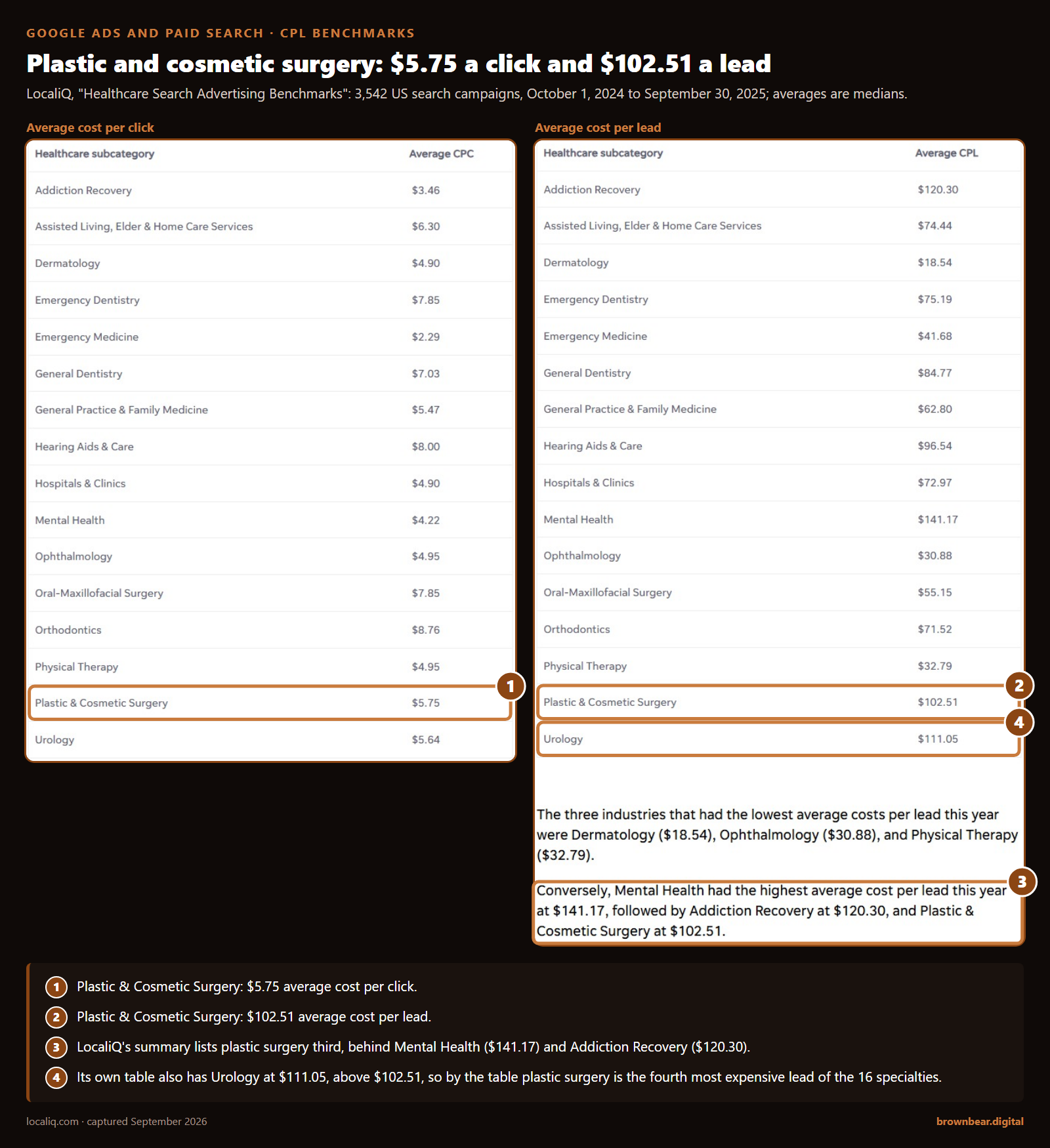
The problem is what's happening between the patient and your practice. A plastic surgery search ad now costs about $5.75 a click and $102.51 per lead, and that lead is still several steps from a booked surgery. On informational searches that show an AI Overview, organic click-through fell 61% between mid-2024 and late 2025. TikTok posts from the most-followed plastic surgeons now out-engage their Instagram posts, which means the playbook that booked consults in 2023 is quietly underperforming right now.
If you're a marketing manager at a plastic surgery clinic, you're feeling this in the numbers. Blended CPA is creeping up. Leadership wants to know why ad spend keeps growing while consult volume is flat. Channels you used to trust are softening. Channels you barely have time to learn, such as AI search, TikTok, and micro-influencer programs, are starting to win the patients you used to.
This isn't a budget problem. It's an allocation and infrastructure problem, and it's solvable.
The clinics pulling ahead are not spending more. They are reallocating toward channels with compounding returns and building the trust infrastructure that makes every channel convert better. This guide breaks down the seven highest-impact marketing channels right now, what each one costs, the ad platform rules that decide what you can run, and a direct ROI comparison so you can defend your 2026 budget and decide what to fund first.
Key Takeaways
Paid clicks are expensive and organic clicks are shrinking
Plastic and cosmetic surgery search ads average $5.75 a click and $102.51 per lead, and organic click-through on informational searches with an AI Overview fell 61%. Practices leaning on either channel alone feel both.
Ad platforms restrict cosmetic surgery, so build campaigns inside the rules
Google bars Customer Match, your data segments and lookalikes for cosmetic surgery ads, and Meta requires 18+ targeting and bans copy that attacks how people look. Plan around those limits before launch, not after a disapproval.
Allocate by practice stage, not by someone else's split
A launching practice buys demand with paid search while SEO matures; an established practice moves paid dollars into assets that compound. The Allocation Ladder below gives the split for each stage.
Reviews are an acquisition channel, so ask every patient
Google's review policy bars asking only the patients you expect to be happy. A steady ask after every visit builds the volume and recency that map rankings and AI answers both draw on.
SEO compounds, and our own case study shows how far
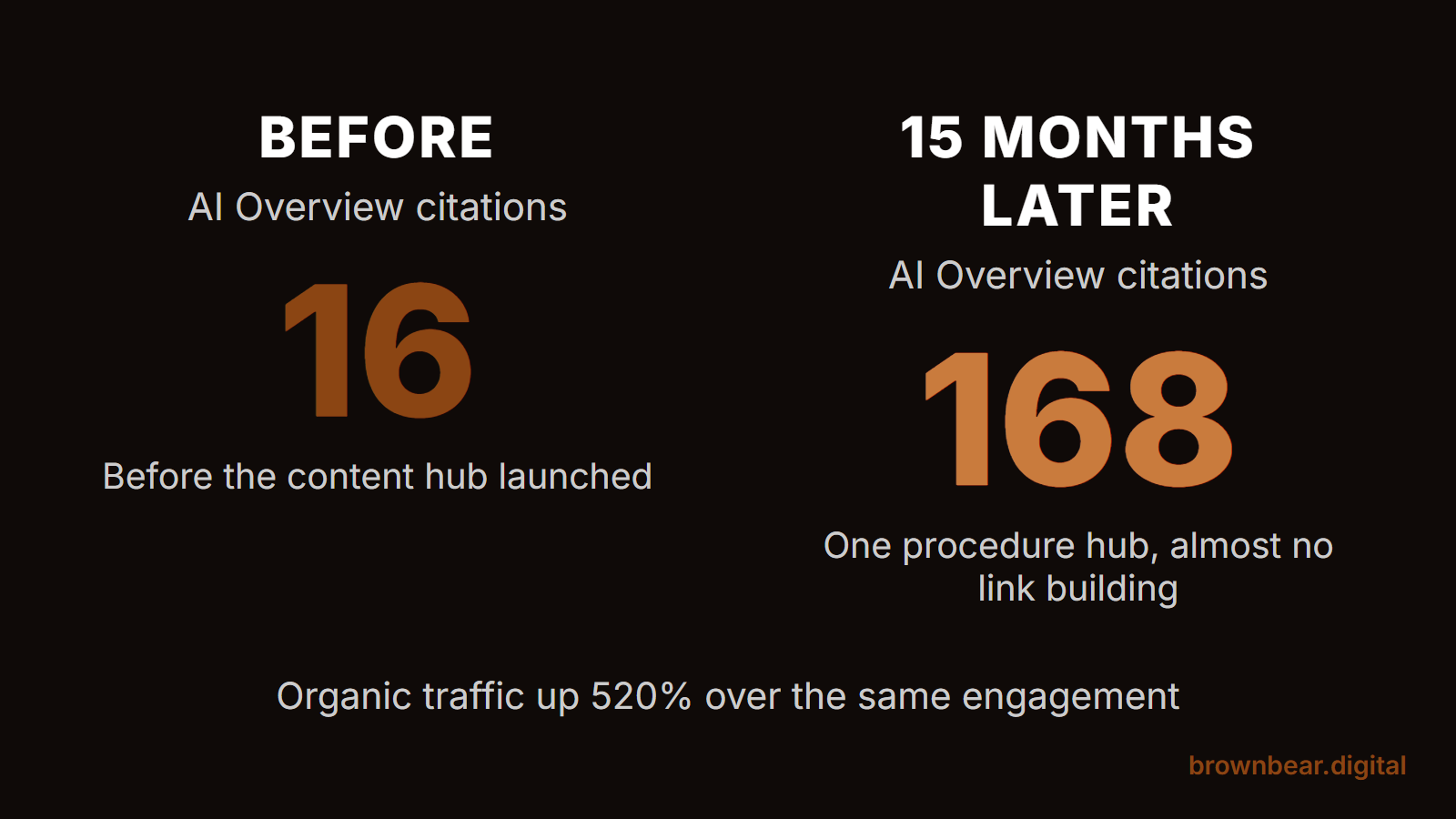
One procedure content hub took a facelift practice from 16 to 168 Google AI Overview citations and grew organic traffic 520% over 15 months, with almost no link building.
The State of Plastic Surgery Marketing in 2026
Three forces have reshaped the channel landscape in the past 18 months:
AI search is absorbing traffic.
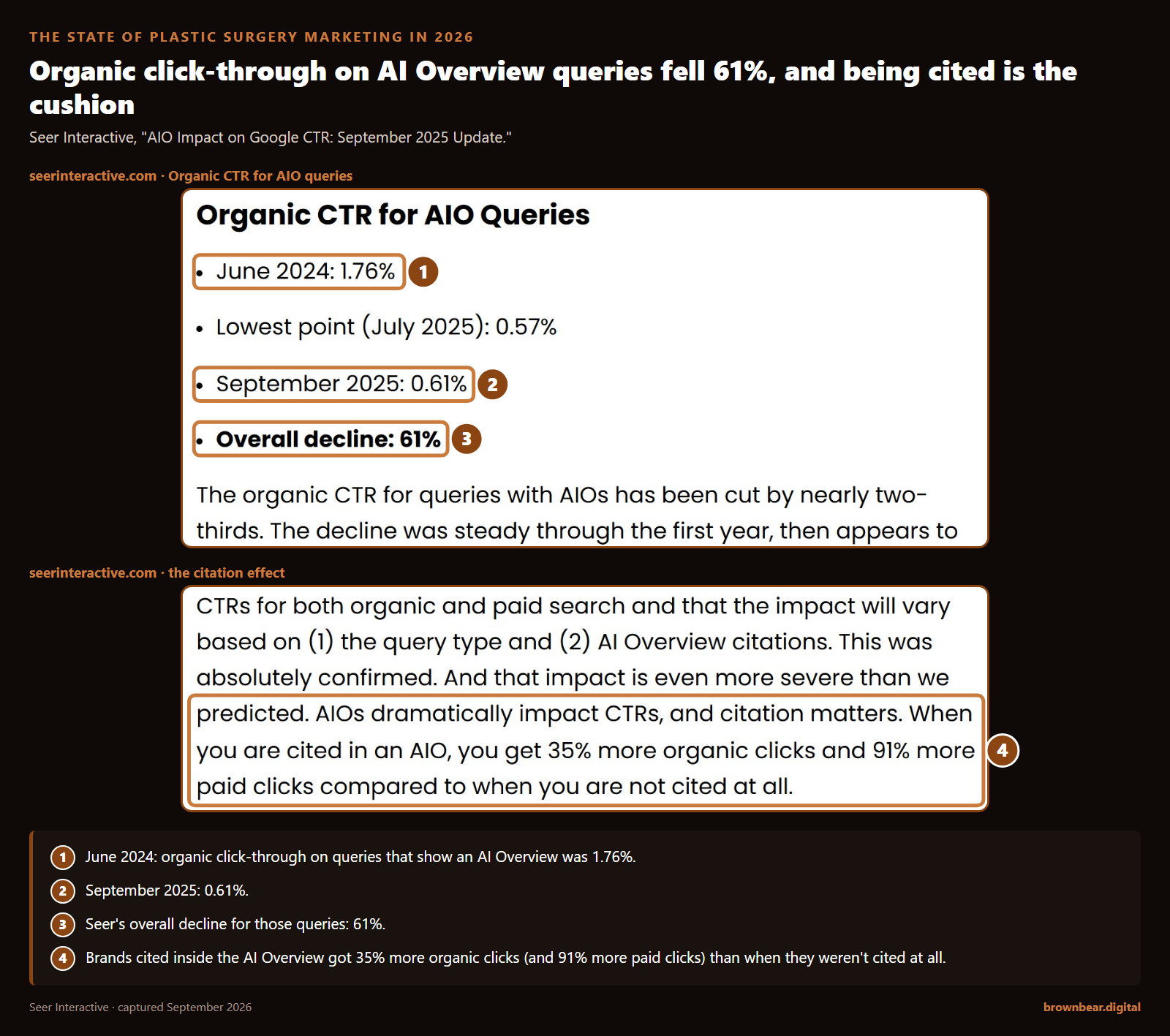
A growing share of patient queries is now answered directly within Google AI Overviews, Perplexity, and ChatGPT, without a click-through to a website. Seer Interactive measured organic click-through on informational searches that show an AI Overview falling 61%, from 1.76% to 0.61%, between June 2024 and September 2025. Being cited inside the overview softens the blow: in the same study, brands cited in an AI Overview earned 35% more organic clicks than brands left out. Practices that relied solely on traditional SEO rankings are seeing traffic drop without any changes in rankings.
Paid media costs have compressed margins.
LocaliQ's healthcare benchmark, built on campaigns run from October 2024 to September 2025, puts plastic and cosmetic surgery at $5.75 a click and $102.51 per lead, the fourth most expensive lead among the 16 healthcare categories it tracks. A lead is not a consultation and a consultation is not a surgery, so the cost that decides your margin sits several steps further down the funnel. Budget allocation and landing page quality are no longer secondary concerns. They are the primary lever on paid ROI.
Patient trust has shifted.
Most patients check reviews early: in an Aesthetic Surgery Journal study, 72% said reading reviews was their first step. A 2026 review in Plastic and Reconstructive Surgery Global Open cites research in which 48.5% of people considering cosmetic surgery said social media influenced their decision. The patient journey is longer, more research-intensive, and more peer-influenced than it was five years ago. Clinics that rely on brand awareness alone, without a content and reputation infrastructure, are losing consults to practices with smaller ad budgets but stronger social proof.
If you've ever watched a smaller competitor take a consult you assumed was yours, this is usually why. The patient didn't pick them based on price or credentials. They picked them because the trust infrastructure, meaning reviews, social presence, and AI visibility, closed the loop in a way yours didn't.
The good news is on the other side of the ledger. A surgical patient with a good outcome comes back for maintenance treatments and sends friends, so the unit economics reward long-term relationship marketing as much as acquisition. Price that for your own practice from your own records, because the lifetime-value figures that circulate online trace back to vendor blogs, not studies. The rest of this guide takes each channel in turn: what it does for a plastic surgery practice, where the return is right now, and how to split a budget across it.
1. SEO and AI Search Optimization: The Highest Long-Term ROI Channel
SEO remains the highest-converting digital channel for plastic surgery clinics because it captures patients who are actively researching: high-intent, pre-qualified traffic that costs nothing per click once rankings are established.
Our own numbers show the compounding. In Brown Bear's plastic surgery content marketing case study, a deep plane facelift practice added one middle-of-funnel content hub and went from 16 to 168 Google AI Overview citations, with organic traffic up 520% over 15 months and almost no link building. That is what organic search looks like when it is built around the questions patients actually ask.
What's changed is the definition of SEO itself.
Traditional SEO (technical optimization, content, backlinks) is now table stakes. The new layer is GEO (Generative Engine Optimization), optimizing for AI systems that intercept search queries before patients reach a website. When a patient asks ChatGPT, "Who is the best rhinoplasty surgeon in [city]?" the AI synthesizes data from your website, reviews, directory listings, and web mentions. If that data is sparse, inconsistent, or missing E-E-A-T signals, your practice doesn't appear. For a deeper walkthrough of this layer, see our GEO and AEO playbook for plastic surgeons.
What GEO requires:
- Structured, high-volume, recent patient reviews that demonstrate consistent outcomes. Google says E-E-A-T is not itself a ranking factor, but its systems look for signals of it, per Google's guidance on helpful, reliable content, and detailed reviews are among the clearest.
- Authoritative long-form content that answers specific procedural questions, not just broad category pages.
- Consistent entity data across your website, Google Business Profile, directories, and third-party citations.
- Schema markup (MedicalClinic, Physician) as a supporting layer, not the lever. In our audits, crawlable, plainly structured text moves AI visibility more than markup does, and LLM crawlers read JavaScript-heavy pages poorly.
The clinics winning organic visibility are treating SEO and GEO as a unified strategy, not separate workstreams.
Our own research reaches the same conclusion from the organic side. In a 101-city study of the pages ranking #1 for a major procedure search, 52% of the winners were practice homepages, most with no procedure keyword in the title tag, six ranked with no schema at all, and one took its market with 487 words and broken markup. On-page work makes a practice eligible. The strength of the practice as an entity, built from reviews, mentions, links, and consistent data everywhere Google reads it, decides who actually wins. That is the same signal set the AI engines are drawing on.
Before-and-after photos follow the same logic. In our 50-procedure study of before-and-after search results, 82% of the 330 ranking practice pages were dedicated gallery pages and only 5% were general procedure pages, so a gallery split out by procedure is a ranking asset as well as proof.
The concern most marketing leads raise here: SEO requires patience your CFO doesn't always have. Six to twelve months is a long runway when you're being asked to defend marketing spend quarterly. The reframe that helps is this: SEO isn't an acquisition channel competing with paid search. It's an asset that lowers your CPA across every other channel once it's established. A practice with strong organic visibility runs cheaper paid campaigns, converts social traffic better, and gets surfaced in AI answers that your competitors don't.
Timeline:
6 to 12 months to meaningful organic volume. Not the right channel for next month's results. The right channel for next year's market position. Brown Bear's plastic surgery SEO services and AI search optimization are built around this compounding model.
2. Google Ads and Paid Search: Fastest Path to Consultation Bookings
Paid search remains the fastest way to generate consultation bookings. Unlike SEO, results are immediate. A well-structured campaign can produce qualified inquiries within days of launch. The two channels also reinforce each other: we make the case for running SEO and SEM at the same time rather than sequencing one after the other.
The challenge today is cost. Plastic and cosmetic surgery clicks average $5.75 and leads $102.51 in LocaliQ's latest healthcare benchmark, and those are averages across every market size. Clinics that set and forget their paid campaigns are burning budget faster than they realize, often without the attribution to know which keywords, ad groups, or landing pages are responsible.
What separates high-performing campaigns from average ones:
Landing page quality is the single biggest variable. Clicks sent to a generic homepage convert worse than the same clicks sent to a procedure page built to book a consult. When an owner tells us Google Ads didn't work, the account teardown almost always shows this problem, alongside a campaign structure that was never tuned for lead quality. It is also the cheapest fix in the account, and it is what landing page conversion work is for.
After reviewing hundreds of plastic surgery websites, we see the same problems repeat: dated or low-resolution imagery, no video anywhere on the site, a homepage full of generic five-star reviews, and procedure pages buried several clicks deep. Each one is friction a paid click has to get past before it becomes a consult request.
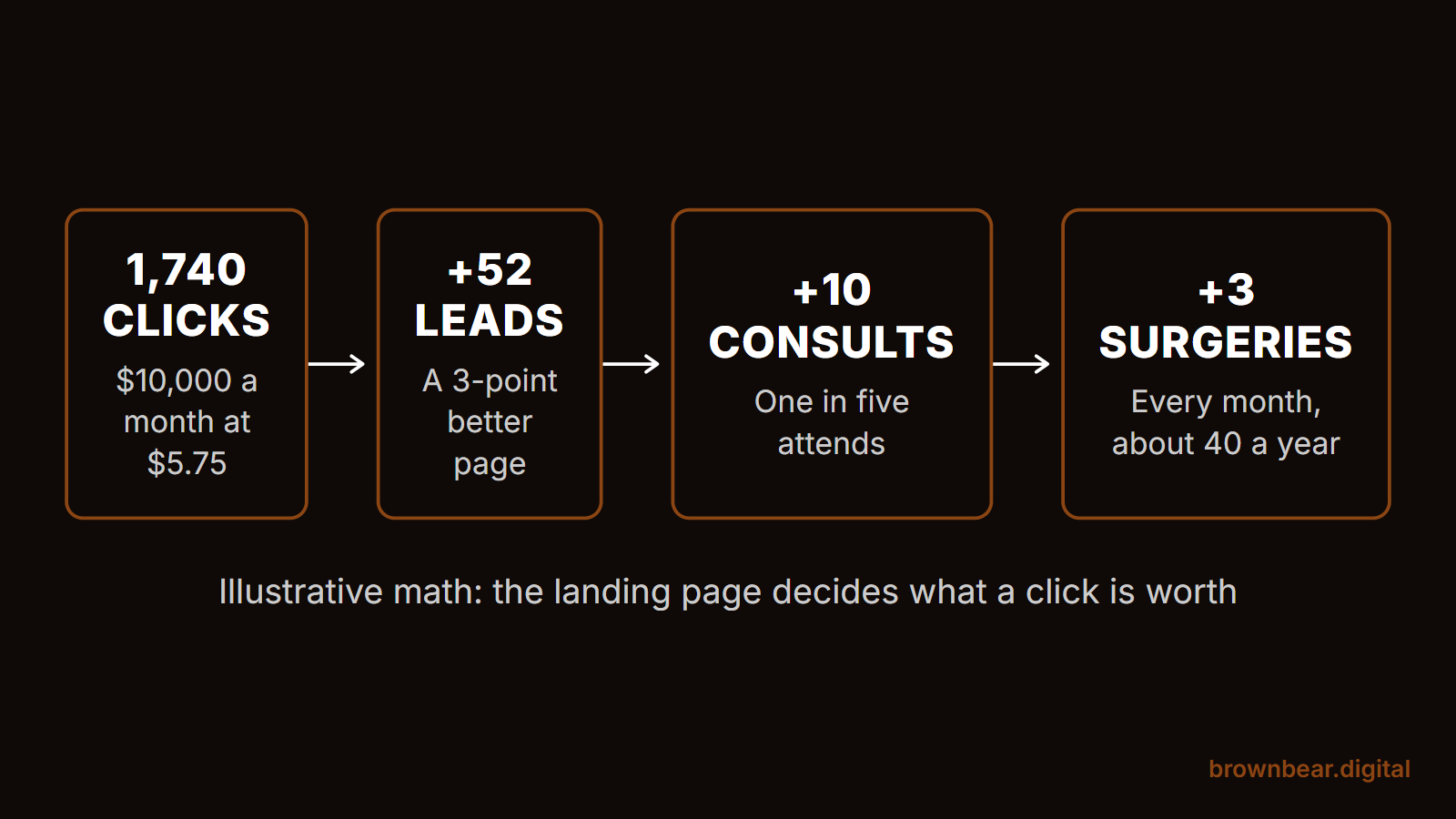
Put numbers on the gap. Say you spend $10,000 a month at the $5.75 average click: about 1,740 clicks. If a procedure page converts 3 percentage points better than your homepage, that is roughly 52 more leads a month. If one in five of those leads attends a consult and one in three consults books surgery, the difference is about three surgeries a month, or around 40 a year. Most clinics never see it because the line item that's leaking is buried in a dashboard nobody audits monthly.
CPL benchmarks:
- Plastic and cosmetic surgery average: $102.51 per lead on a $5.75 average click (LocaliQ, October 2024 to September 2025)
- Your own number moves with your market and procedure mix, so track it against your own history first
- Judge campaigns on cost per attended consult, not cost per lead; the measurement section below explains why
Retire the 19x return figure that still circulates for cosmetic surgery search ads. It comes from a Google slide in a 180fusion webinar, built on 2014 click costs, an estimated 2% lead conversion rate and $3,000 in billings per patient, and click costs have moved a long way since. Your own cost per surgery is the only return figure worth defending.
Where paid search earns its budget:
- Launching a new procedure with no organic history
- Seasonal pushes (summer body procedures, holiday gifting of non-surgical treatments)
- Competitive local markets where organic rankings take too long to build
- Branded searches, so a patient who already knows your name does not land on a competitor's ad
If you are starting paid search, start narrow: one high-margin procedure in one market. One tight campaign produces cleaner data, sooner, than an account spread across every procedure, and you scale once it shows a cost per consult you can live with. Keep that money on Search. A patient typing "rhinoplasty surgeon Boston" is choosing a surgeon; a patient shown a banner while reading the news is not, which is why Display is the first line to cut when budget is tight.
Where paid search leaks budget:
- Broad match keywords without negative keyword lists
- Driving all traffic to the homepage rather than procedure-specific pages
- No call tracking, so you cannot attribute booked consults to specific campaigns
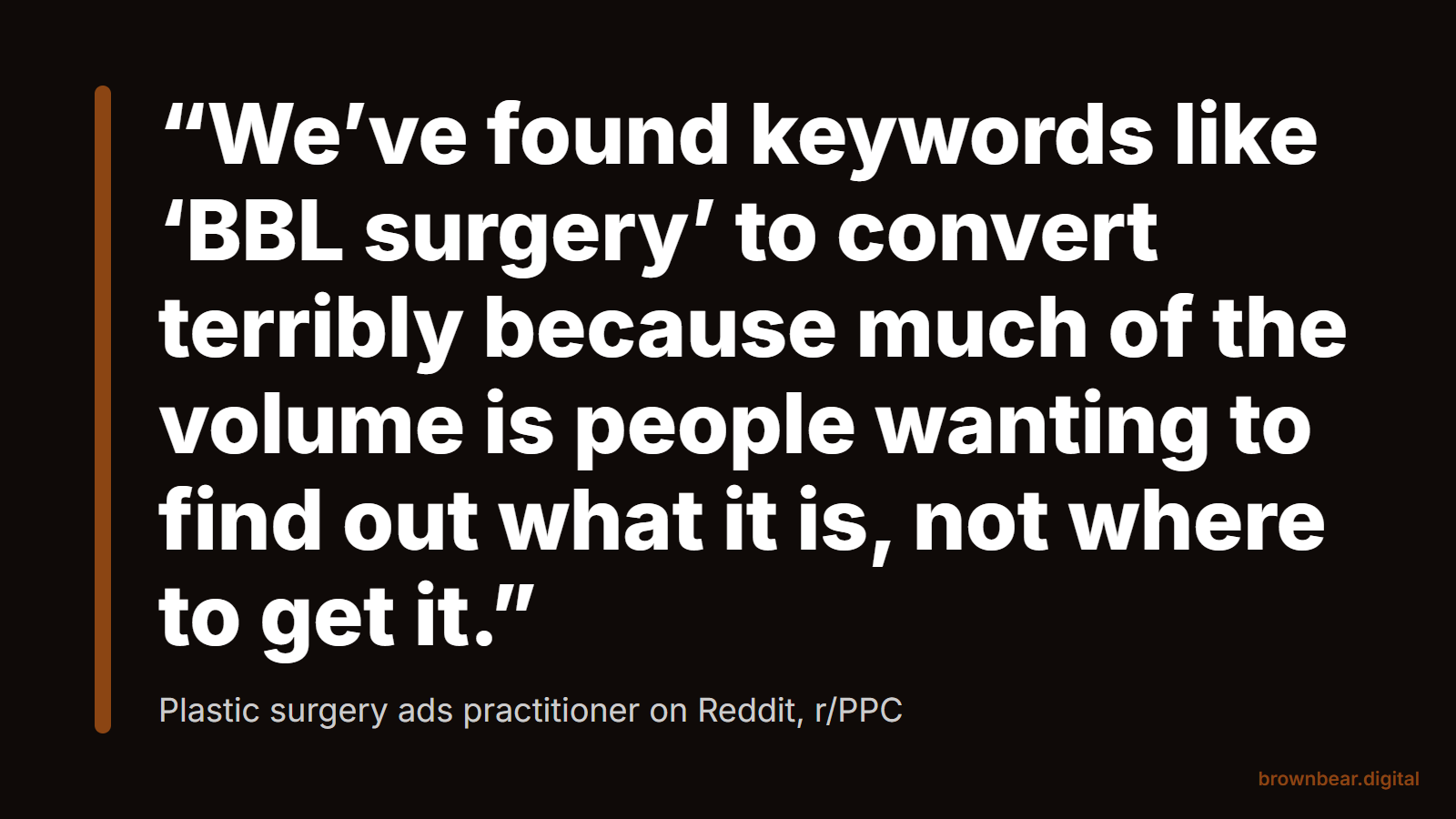
- Automated keyword expansion reaching research searches that never book
The clinics generating the best ROI are treating Google Ads as a precision tool: tightly themed ad groups, dedicated landing pages per procedure, and conversion tracking down to the booked-appointment level. If you're a practice owner running paid campaigns yourself between clinical shifts, the highest-leverage thing you can do this quarter isn't increasing spend. It's auditing where your existing spend is landing and whether you can attribute a single booked consult to a specific campaign. Brown Bear's paid search services audit and restructure campaigns around exactly this standard.
The Ad Policy Rules That Shut Down Plastic Surgery Accounts
One of the most common calls we take from practices burned by a previous agency goes like this: the ads were running, something in the account got flagged, everything went dark, and nobody on the agency side knew why. Cosmetic surgery sits in a restricted category on both Google and Meta, and four rules do most of the damage.
Google limits who you can target.
Google's Health in personalized advertising policy lists cosmetic surgery among invasive medical procedures, so these ads cannot use advertiser-curated audiences such as your data segments, Customer Match or lookalikes, which rules out classic remarketing to procedure-page visitors. Predefined Google audiences, demographics and location targeting remain available. The keyword and negative-list side of this is covered in depth in our plastic surgery PPC guide.
Google restricts prescription drug terms.
Its Healthcare and medicines policy restricts prescription drug terms in ads, keywords and landing pages, and advertisers have to apply before they can use them. That can catch practices with an injectables line, since neuromodulator brands such as Botox are prescription drugs. Check the policy before you build a campaign around a brand name.
Meta limits what the ad can say.
Meta's health and wellness standards require ads for cosmetic procedures and surgery to target people 18 or older, and they bar statements that attack a person's appearance, specific body parts or hygiene. Before-and-after transformations are allowed for general cosmetic procedures, so the line Meta draws is copy that makes the viewer feel bad about how they look. Build Meta ads around patient outcome stories, the surgeon and the practice, not the flaw a procedure fixes. Since early 2025, Meta has also placed many health advertisers in a restricted data category that limits the lower-funnel events, such as leads and scheduled appointments, their pixel can use for optimization; Events Manager shows whether yours is one of them.
Tracking carries HIPAA risk.
Retargeting pixels, audiences built from patient email lists, and conversion tracking tied to consult bookings all touch patient data. HHS guidance says tracking tools on pages behind a login, such as a patient portal, generally have access to protected health information, and a tracking vendor that receives it is a business associate that needs a business associate agreement. In June 2024 a federal court in Texas vacated the part of that guidance covering public pages that need no login, so the rules for public procedure pages are less settled than the guidance once suggested. If a CRM or pixel sends patient data to Meta or Google for targeting, have counsel review the setup before launch.
3. Social Media: Platform Strategy, Not Just Posting
Social media for plastic surgery clinics is not a single channel. It is a set of distinct platforms with different audiences, content formats, and conversion behaviors. Treating them as one is why most clinics underperform on social.
TikTok
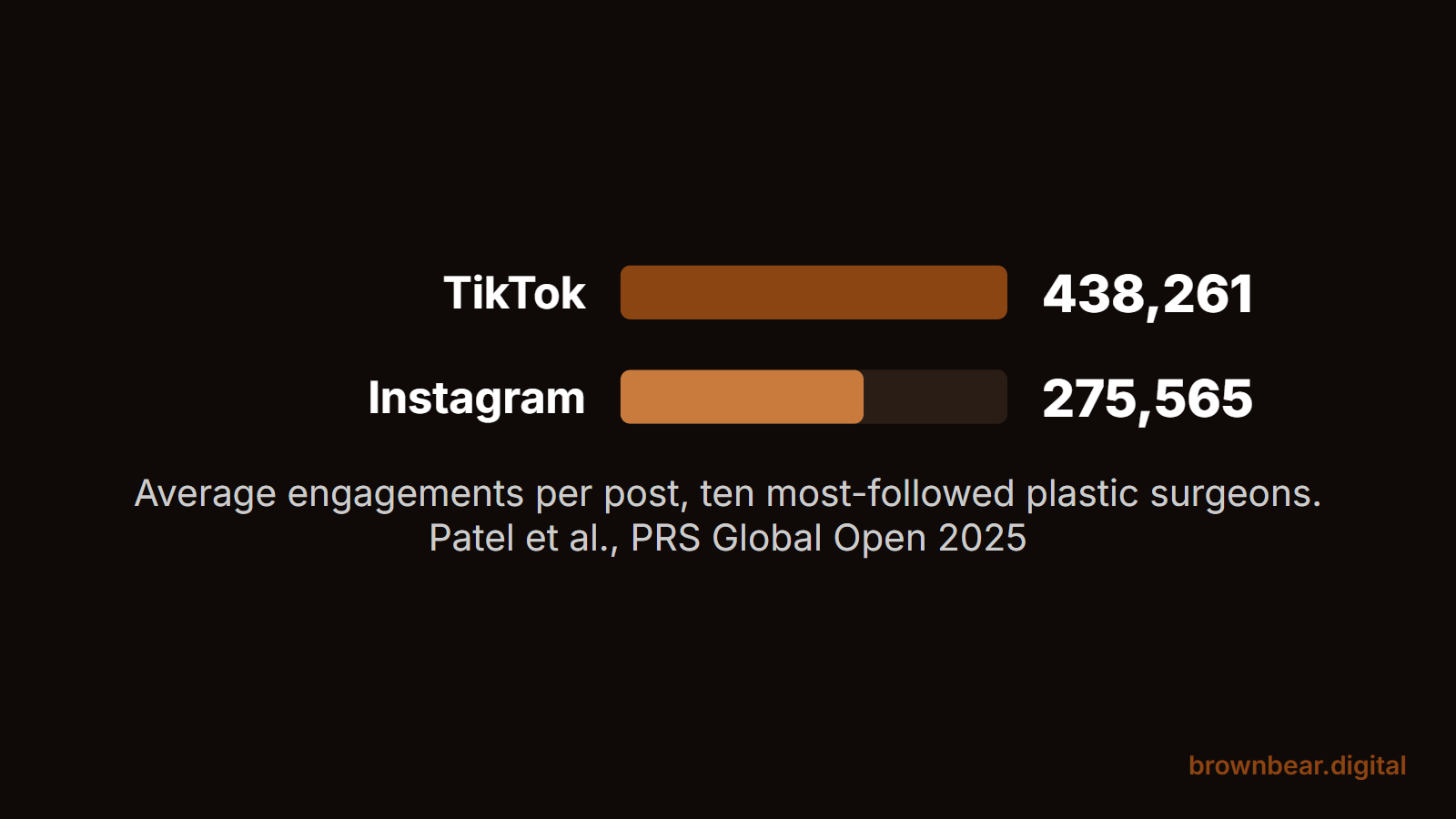
out-engages Instagram for the surgeons who lead both. In a 2025 study of posts from the ten most-followed plastic surgeons, published in PRS Global Open, TikTok posts averaged 438,261 engagements against 275,565 on Instagram. Comedy was the most common TikTok format, educational posts made up about a third, and educational content drew more engagement on TikTok than on Instagram. Patients on TikTok are in discovery mode: learning about procedures, normalizing the idea of surgery, and identifying practitioners whose personality they trust. The conversion path is longer, but the awareness impact is significant.
remains the platform for self-promotional content, before-and-after showcases, and procedure education through Reels and Stories. It converts better at the consideration stage, where patients have already decided they want a procedure and are comparing practitioners. The visual quality bar is higher on Instagram, and the audience skews slightly older and higher-income than on TikTok.
YouTube Shorts
suits clinics that produce well-edited before-and-after videos with procedure walkthroughs. YouTube's search intent means patients find this content during active research, not passive scrolling, which is a higher-intent context than either Instagram or TikTok.
is the platform clinics drop too early. A 2023 systematic review of 16 studies in Aesthetic Surgery Journal Open Forum matched platforms to patient age, and its recommendations split cleanly:
| Patient age | Most common procedure in the group | Platforms the review recommends |
|---|---|---|
| 17 to 35 | Breast augmentation | Instagram, Snapchat, TikTok |
| 36 to 70 | Liposuction | Facebook, Instagram, YouTube |
| 70 and older | Blepharoplasty |
If your revenue comes from body contouring and eyelid surgery for patients in their 40s, 50s and 60s, a plan built only on Reels and TikTok is aimed at the wrong audience. Follow the patient, not the algorithm.
Patients look up the practice's and the surgeon's social accounts before they book. Social media isn't just an awareness channel. It is the trust-building infrastructure that determines whether a patient picks up the phone.
If you've inherited a social presence that's mostly Instagram and feels like it's plateaued, you're not behind. You're at the same starting line as most of your competitors. The clinics breaking out are the ones treating each platform as its own strategy: TikTok for awareness and personality, Instagram for portfolio and authority, YouTube Shorts for procedural education and high-intent research capture.
4. Influencer Marketing: A Standalone Acquisition Channel
Influencer marketing has matured from a brand awareness play into a measurable acquisition channel for plastic surgery clinics. The evidence on influence is real but narrower than most agency posts claim: in a 2024 survey published in Cureus, 37.9% of respondents said before-and-after pictures affected their desire to have a procedure, and the research cited above puts social media's influence on prospective patients at nearly half.
The return figure that circulates for this channel, $5.78 per dollar, is a cross-industry earned-media-value estimate from 2019 data, not patient revenue. Measure your own program by consults booked.
The micro-influencer shift is real and significant.
Brands across industries have moved budget toward micro and mid-tier creators, and the trust dynamic is different at smaller scale. Picture a local creator documenting her rhinoplasty recovery for 25,000 followers, week by week. She reaches fewer people than a celebrity endorsement seen by 2 million strangers, and she tends to book more consults, because her followers live nearby and trust her.
Cost comparison:
- Micro-influencer, 10K to 50K followers: $100 to $500 per Instagram post
- Mid-tier, 50K to 500K followers: $500 to $5,000 per post
- Macro-influencer, 500K to 1M followers: $5,000 to $10,000 per post
Rates from Influencer Marketing Hub's 2026 rate guide; local creators in a narrow niche often negotiate below them.
What an effective influencer program looks like for a plastic surgery clinic:
Partner with 8 to 15 local or niche micro-influencers who have had genuine procedures at your clinic, or who are in your target demographic and would authentically share an experience. Authentic documentation of the consultation, recovery process, and final result outperforms scripted promotional content every time. Long-term ambassador relationships across multiple posts over 3 to 6 months outperform one-off sponsored posts in both trust and conversion.
The objection most clinics raise here is real and worth naming: managing 8 to 15 creator relationships sounds like a part-time job nobody has time for. It is, if you treat it as a campaign. It isn't, if you build it as a quarterly program with templates, content calendars, and a single point of contact owning the relationships. The clinics making this work aren't doing more work. They're systematizing the work.
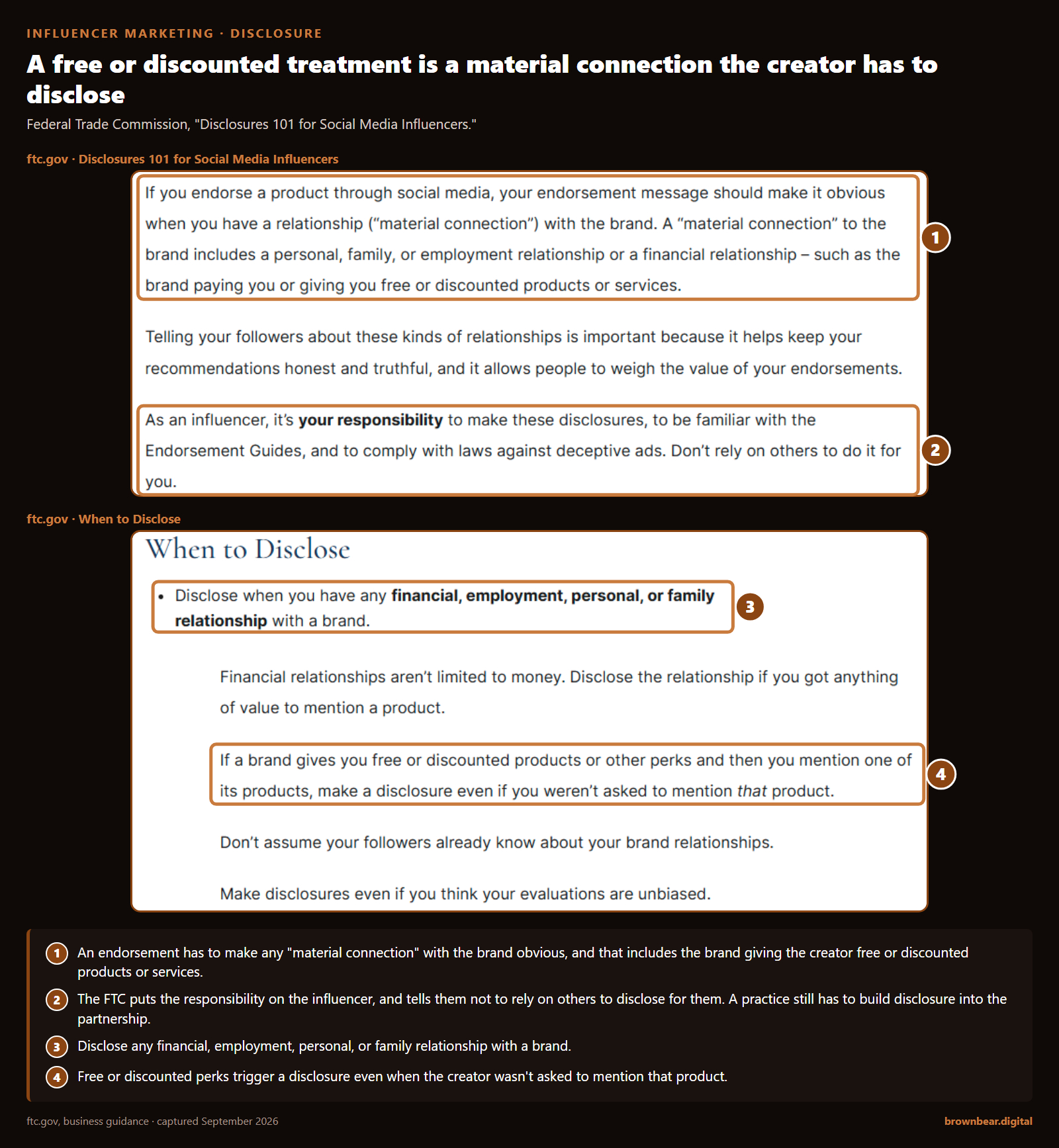
Every partnership needs a clear disclosure: the FTC expects a creator to make any material connection to your practice obvious, including free or discounted treatment. Every before-and-after needs the patient's written consent or a HIPAA-compliant photo release, and posts should clear your state's medical advertising rules before they go live.
5. Reputation Management: The Silent Revenue Driver
Reputation management is often treated as a reactive task: responding to bad reviews when they appear. Today, it's an active acquisition channel.
Most patients read reviews before they choose a surgeon. Picture two practices in the same map pack: one with 320 reviews at 4.8 stars, one with 40 at 4.9. Patients read the first as the safer choice, because volume signals credibility in a way a perfect score alone cannot. The system for getting there is covered in plastic surgery review generation and response.
Why reputation management is a marketing channel now:
Google's local results and generative AI platforms both draw on review content when they recommend practitioners. High-volume, structured, recent reviews that mention specific procedures, outcomes, and staff experiences are synthesized by these systems. A practice with consistent, detailed reviews for rhinoplasty tends to surface more reliably in AI-generated answers to "best rhinoplasty surgeon in [city]" than a practice with generic 5-star ratings.
The reputation stack for plastic surgery clinics:
- Google Business Profile: fully optimized with procedure-specific services, photos, updated hours, and a review request that goes to every patient
- RealSelf: the dominant procedure-specific review platform; profile completeness and review volume shape how many inquiries it sends you
- Healthgrades and Vitals: secondary but indexed by AI systems; incomplete profiles are a trust gap
- Review velocity: recency matters. A steady monthly flow of new reviews tells patients and algorithms the practice is active in a way a large but stale total does not.
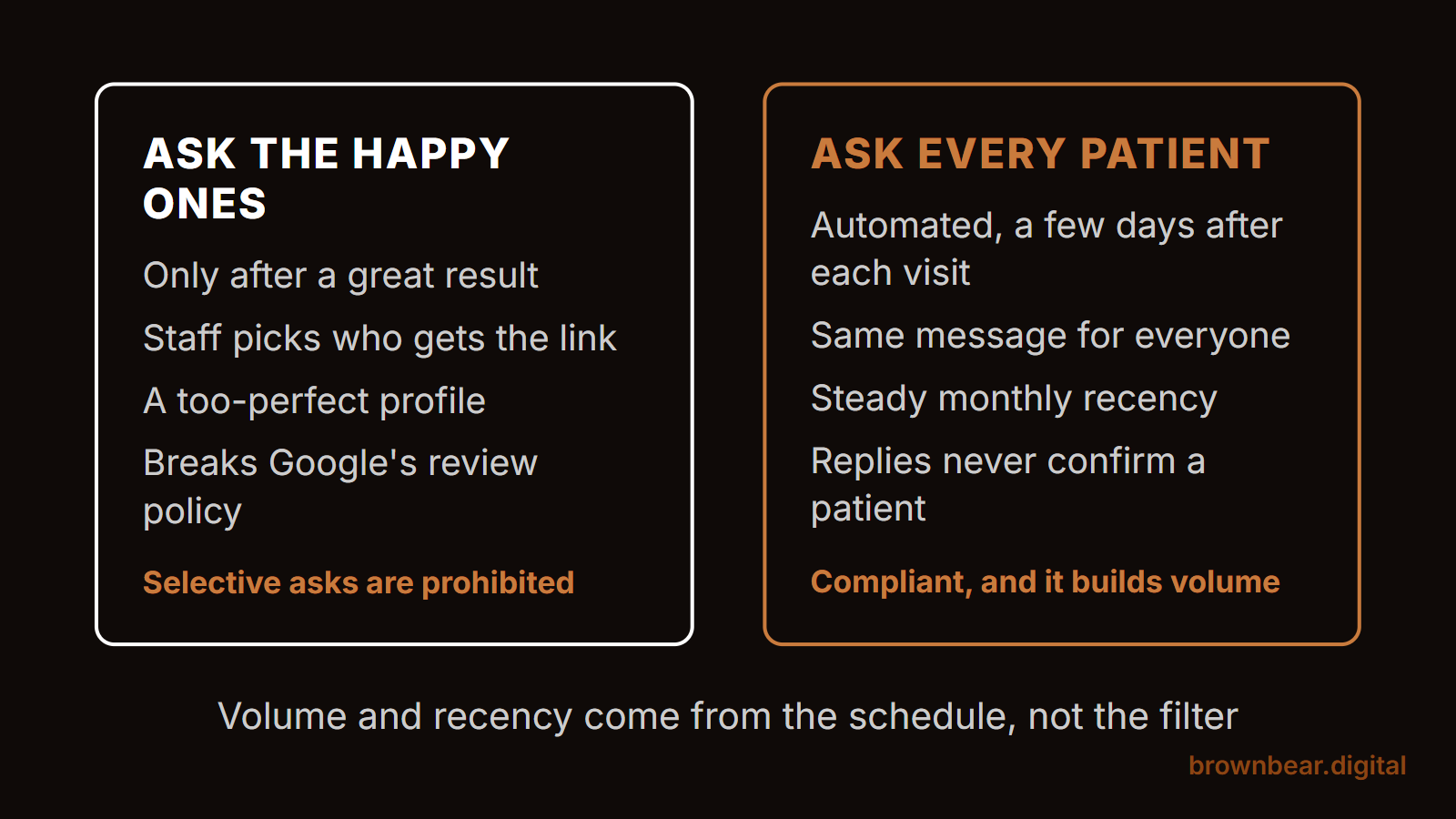
Systematize review collection at the post-appointment touchpoint: an automated SMS or email a few days after every visit, sent to every patient, not only the ones you expect to be happy. Google's review policy prohibits selectively soliciting positive reviews, and a filtered ask also produces the too-perfect profile patients distrust. A consistent ask still collects far more reviews than waiting for patients to volunteer them. When you reply, thank the reviewer without confirming that they are a patient.
This is the single highest-leverage, lowest-cost project most clinics under-invest in. If you've been thinking "we need to do something about reviews" for the last six months without making it concrete, this is the project to put on next month's calendar.
6. Email and Patient Retention: The Highest-Conversion Channel You Are Probably Under-Using
Patient acquisition gets most of the marketing budget. Patient retention generates most of the revenue.
Judge email by consults booked, not by opens: since Apple's Mail Privacy Protection began loading images automatically, open rates count machine opens, so the healthcare open-rate benchmarks that circulate no longer mean much. For plastic surgery clinics, email is the channel with the shortest path to a booked appointment for existing patients and warm leads. No algorithm. No ad auction. Direct to inbox.
The unit economics of retention:
- Every patient with one good outcome is a candidate for maintenance treatments and a source of referrals
- Cost of a re-engagement email campaign: effectively zero beyond time investment
- The value of a returning patient is specific to your practice, so price it from your own records; lifetime value per patient is one of the numbers in the measurement section below
Retaining and reactivating existing patients costs a fraction of acquiring new ones, and plastic surgery patients who have had one positive procedure experience are the highest-converting audience in your entire database.
What an effective email program looks like:
Check what you can send, and to whom, before you build it: segmenting by procedure history touches protected health information, so read the HIPAA rules for practice email first.
- Consult nurture sequence: 4 to 6 emails over 3 weeks for leads who have inquired but not booked, covering procedure education, FAQs, before/after results, and financing options
- Post-procedure follow-up: outcome check-ins that reinforce satisfaction and create natural review solicitation moments
- Seasonal campaigns: procedure-specific campaigns timed to demand cycles (January body contouring, spring/summer rhinoplasty, Q4 non-surgical gifting)
- Reactivation campaigns: targeting patients who haven't visited in 12+ months with personalized outreach based on their procedure history
Segmentation is the difference between the email that converts and the email that unsubscribes. Patients who had a rhinoplasty three years ago aren't the same audience as patients who attended a consultation but didn't book.
Referrals: The Retention Channel Most Practices Never Track
Patients who had a good experience are also your cheapest source of new consults. Make the ask at the post-op visit where the result is visible, give the patient something easy to share, such as the surgeon's bio or gallery link, and record referral as its own source at intake so the channel gets credit. Check with counsel before attaching any reward to a referral, because rules on referral incentives in medicine vary by state.
7. AI Tools and Marketing Automation: Faster Replies, Fewer Lost Leads
The measurable win from AI tools in a practice is speed and consistency: every inquiry answered in minutes, follow-up that never slips, and lists segmented so the right patient gets the right message. (For the specific software worth using, see the cosmetic surgery marketing tools nobody puts on the top 10 list.)
Where AI is delivering the most impact for plastic surgery clinics:
AI chatbots for 24/7 lead qualification and booking.
A prospective patient who submits an inquiry at 10pm on a Friday either books a consultation with your chatbot in the next 10 minutes, or searches for the next practice. Speed-to-response is one of the highest-leverage variables in lead conversion. Harvard Business Review's audit of 2,241 US companies found that firms contacting a web lead within an hour were nearly seven times as likely to qualify it as firms that waited longer. Keep the chatbot on booking, logistics and general questions; anything medical goes to the surgeon's team.
Predictive cohort segmentation.
AI-driven platforms can segment your patient database by procedure interest, engagement patterns, and likelihood to book, enabling campaigns targeted to patients most likely to convert rather than broadcasting to your entire list.
ROI forecasting by channel.
AI-powered attribution tools can predict which marketing channels will deliver the highest returns for specific procedures, enabling smarter budget allocation before spend is committed.
Automated follow-up sequences.
Leads that don't convert immediately usually need several touchpoints before booking. Manual follow-up at that cadence isn't scalable. Automated sequences maintain consistent contact without staff overhead.
The caveat: AI tools require clean data to work. Clinics with fragmented CRM systems, inconsistent lead tracking, or no attribution infrastructure will not see the same gains. If you're a newly promoted marketing director who inherited three disconnected tools and a CRM nobody trusts, this is the prerequisite project. Fix the data layer before you buy the AI layer.
Channel ROI Breakdown: Where to Prioritize Your Budget
Every channel below can pay off. What differs is how fast it works, what a consult costs through it, and what it needs in place before it performs.
| Channel | Time to Results | Cost to Acquire | Conversion Strength | Strongest Use Case |
|---|---|---|---|---|
| SEO + GEO | 6 to 12 months | No cost per click once rankings hold; content and retainer costs up front | Highest, intent-matched | Long-term market position, compounding returns |
| Google Ads | Days | About $103 per lead on average | Depends on the landing page | New procedures, competitive markets, immediate volume |
| Social Media | 2 to 4 months | Low, variable | Lower, awareness stage | Brand building, patient trust, discovery |
| Influencer Marketing | 1 to 3 months | $100 to $500 a post for local micro-creators | High for local micro-influencers | Procedure normalization, authentic social proof |
| Reputation Management | Ongoing | Near-zero | Indirect, multiplies all channels | Trust foundation for every other channel |
| Email and Retention | Immediate for an existing list | Near-zero | Highest, warm audience | Re-engagement, retention, consult nurture |
| AI and Automation | 1 to 3 months to deploy | Software cost; saves leads that would otherwise go cold | Improves conversion across all channels | Lead response, follow-up, segmentation |
How Much to Spend in Total
Most practices put 1 to 5% of annual revenue into marketing, and practices pushing for aggressive growth go as high as 10%, according to the 2026 PRS Global Open review of practice marketing. Where you sit in that range is a stage decision, and so is how you split it.
The Allocation Ladder: Match the Split to Your Stage
A fixed percentage split is the most common budget advice in this category and the least useful, because the right split depends on what your practice already owns. These are the splits we typically set up at each stage, not an industry standard.
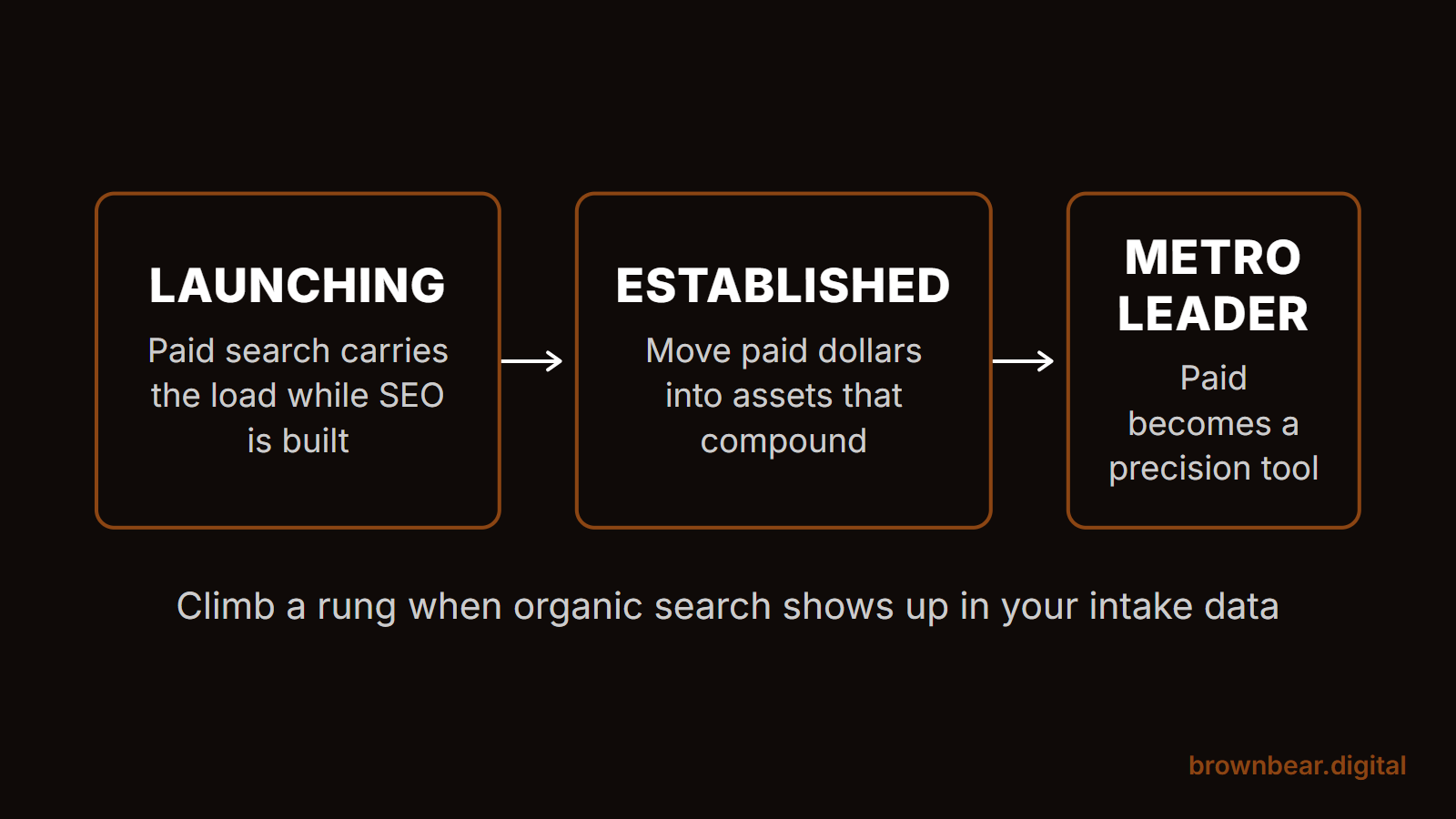
If you are launching, or adding a procedure with no organic history:
paid search carries the load while SEO is built. Around 50 to 60% paid search, 25 to 30% SEO and content, and the rest across reviews, email and social. Climb to the next rung when organic search starts producing consults you can see in your intake data.
If you are established and organic search already produces consults:
start moving paid dollars into assets that compound. Around 30 to 40% paid search, 25 to 30% SEO and content, 15 to 20% social and creator work, and about 10% across reviews and email. Paid now covers the procedures and markets where you are not yet visible organically.
If you rank well organically in a saturated metro:
paid search becomes a precision tool for your highest-value procedures and competitor-heavy terms, often 20 to 30% of the budget, while reviews, AI visibility and retention take a larger share, because every consult they produce is one you stop buying at metro click prices.
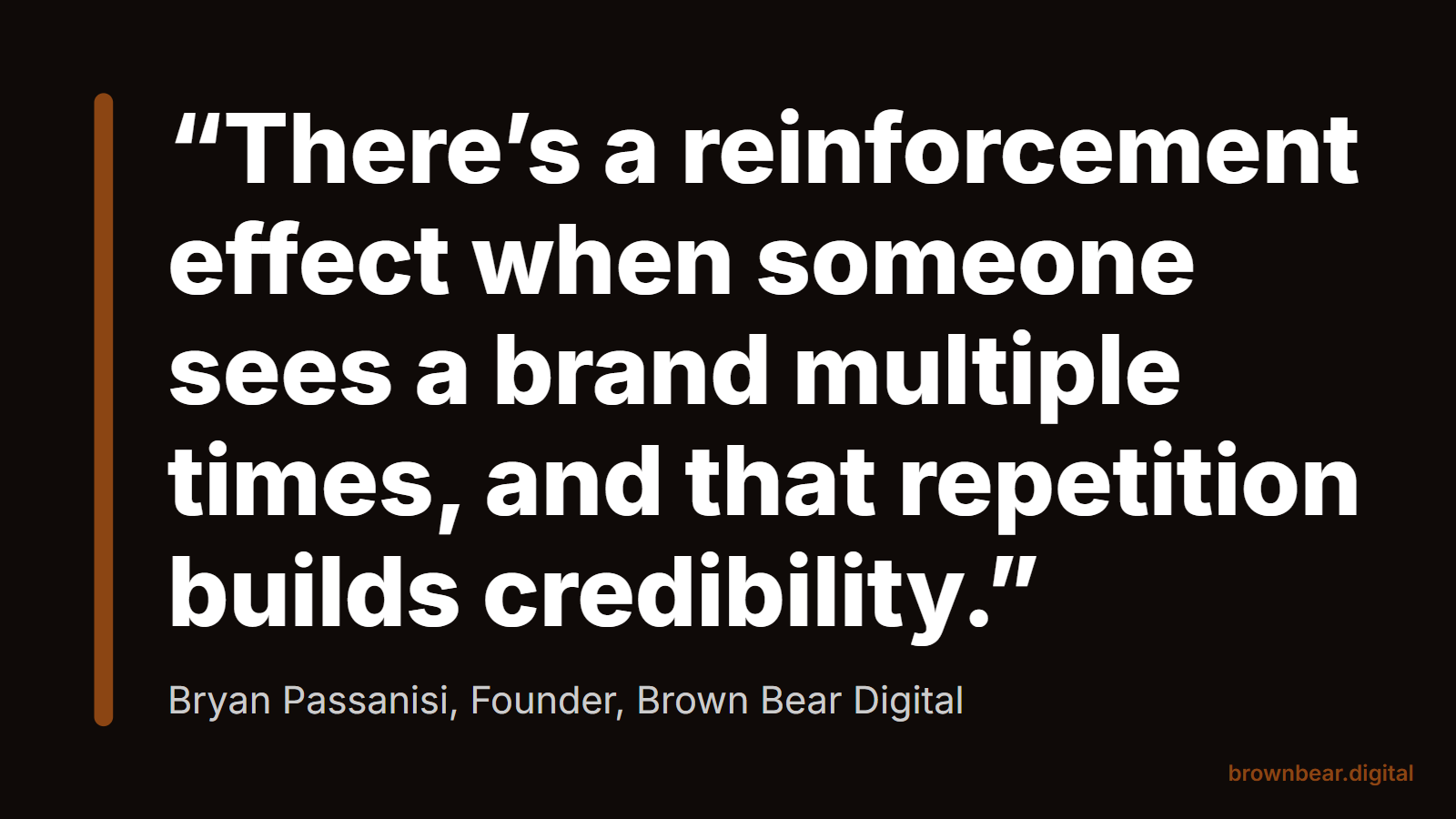
Bryan Passanisi, Brown Bear's founder, puts the retainer math this way: a $1,500 to $2,000 monthly SEO retainer over twelve months costs about as much as two solid organically sourced procedures bring in, and cutting SEO to fund ads erodes the compounding and locks a practice into buying every consult.
Picture a two-surgeon practice three years in, spending $20,000 a month with 70% of it on Google Ads and already showing in the map pack for breast augmentation. By the ladder it sits on the established rung, overweight on paid. Moving $4,000 a month from its weakest procedure terms into a review program and one procedure content hub keeps paid search on the terms that book, while building the assets that lower next year's cost per consult.
To find which channel should give up budget first, run your own numbers through the planner below.
What to Cut First When the Budget Tightens
Cut in this order: display advertising, social media management with no consult attribution, high-volume content with no keyword strategy behind it, and any channel you cannot trace to booked consultations within 90 days. Each frees money without touching the channels that are booking surgery now.
If you run more than one location, the mix shifts. Each location needs its own Google Business Profile and its own review flow, and paid campaigns need location-level structure so one office does not spend another's budget. Revisit the split every quarter, because a rhinoplasty-focused practice in a suburban market and a full-service practice in a major metro rarely keep the same mix for long.
What Is No Longer Working
Vanity metrics on social.
Follower counts and likes aren't booked consultations. Picture a practice with 80,000 Instagram followers generating 12 consults a month next to one with 8,000 followers and a strong micro-influencer program generating 40. The smaller account is the better business. Measure from click to consult, not from post to like.
Generic content without E-E-A-T.
Google's systems look for signals of Experience, Expertise, Authoritativeness, and Trustworthiness, and AI answers draw on the pages and sources those systems trust. Content that doesn't demonstrate specific clinical outcomes, named surgeon expertise, and verifiable patient results is losing visibility, and that trend will accelerate.
Single-channel dependency.
Organic click-through on AI Overview searches fell by more than half in 15 months. Any clinic that built its entire acquisition model on one channel is exposed to a platform-level change it cannot control. A diversified channel stack is now a risk-management requirement, not a growth-strategy option.
Ignoring AI search.
Practices that haven't optimized for AI Overviews, ChatGPT recommendations, and Perplexity citations are already losing visibility to competitors who have. This is the current state, not a future trend.
Where to Start in the Next 30 Days
If you've read this far and you're trying to figure out what to actually do on Monday morning, here's the sequence that creates the most leverage with the least disruption. It assumes you already spend across several channels; if you are starting from zero, use the build order that follows it instead.
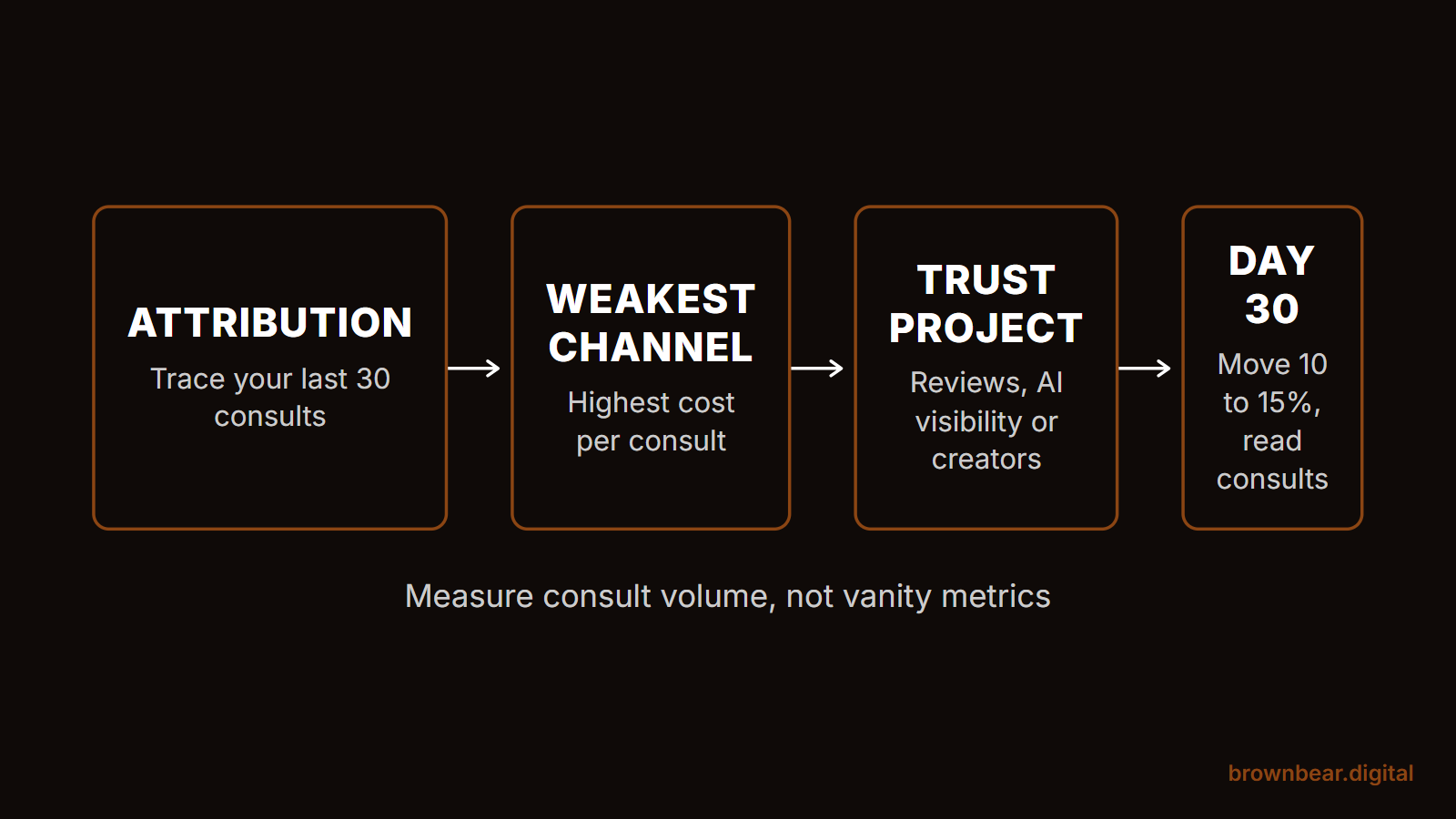
- Audit your current attribution. Pick your last 30 booked consultations and trace each one back to its origin channel. If you can't, that's the project. Without attribution, every other decision in this guide is a guess.
- Identify your single weakest channel by CPL. Not the one you spend the most on. The one with the worst CPL-to-conversion ratio. That's where the leak is.
- Pick one trust infrastructure investment to start this quarter. Most clinics should pick reviews (systematized post-appointment review collection). If your reviews are already strong, pick GEO/schema markup. If both are solid, pick a micro-influencer pilot with 3 to 5 creators.
- Run a 30-day reallocation test. Move 10 to 15% of budget from your weakest channel into the trust infrastructure project. Measure consult volume, not vanity metrics. Decide at day 30 whether to expand the reallocation. If that channel still supplies more than a third of your consults, start at 10%; if it supplies little, 15% is safe.
Not sure which trust project comes first? Tick what is true for your practice below; the picker applies the same order.
This sequence works because it forces attribution first (so future decisions are defensible), addresses the weakest channel before adding new ones, and builds a trust foundation that compounds rather than depreciates.
Starting From Zero: What to Fund First
A new practice, or one rebuilding its marketing from scratch, has no weak channel to move money out of yet. The risk is the opposite one: spreading a first budget across six channels at once produces no clean data and compounding waste. Build in order, and let each layer settle before adding the next.
- Website and conversion. Every channel routes here, so fix procedure pages, mobile load speed and the consult request before you buy a single click.
- Google Business Profile and a review habit. Both cost little and put you in front of patients already searching your city.
- Paid search on one or two procedures. It books consults now and carries the load while SEO is built, which is the launching rung of the Allocation Ladder above.
- Content and AI search. These compound slowly into authority competitors cannot copy quickly.
- Measurement from the first dollar. Attribution is what tells you when to climb to the next rung, and once you have a quarter of it, the 30-day plan above takes over.
If an agency will run these channels for you, put it through the questions in our guide to evaluating a plastic surgery marketing agency before you sign.
How to Measure What Is Actually Working
The clinics with the clearest picture of their marketing ROI track one chain of numbers across every channel: cost per lead, lead-to-consult rate, consult-to-procedure rate, cost per acquisition, and patient lifetime value. How to calculate each one, and the ranges we see across practices, is covered in our guide to plastic surgery marketing benchmarks.
One warning before you compare your numbers with anything you read online. Blended cost-per-acquisition figures under $100 circulate widely, and they mix injectable and laser bookings with surgery. If most of your volume is non-surgical, a blended figure is a fair yardstick for that line of business. If surgery drives your revenue, report surgical acquisition cost separately and judge every channel on cost per surgery, because an average padded with injectable appointments says nothing about what a facelift patient costs to acquire.
Add one line most dashboards miss: consults referred by AI assistants such as ChatGPT. Across our client analytics, those referrals convert to consultations at a higher rate than our other channels, and the volume is still early.
Any channel that can't be tracked to a CPL or CPA should be treated as brand-building expenditure with appropriate expectations, rather than as a lead-generation channel.
What Does the Channel Landscape Look Like Right Now?
The plastic surgery marketing channels with the greatest return today aren't new. What has changed is the sophistication required to make each one perform.
SEO now requires GEO for AI systems. Paid search requires procedure-level landing pages to convert the clicks it pays for. Social requires a platform-native content strategy across several different content cultures. Influencer marketing requires authentic micro-partnerships, not celebrity placements. And reputation management is now an algorithmic variable, not just a customer service function.
The clinics generating the highest ROI are not the ones with the biggest budgets. They're the ones with the clearest attribution, the strongest patient trust infrastructure, and a channel mix built for compounding returns rather than immediate volume.
Done well, the immediate payoff is clarity: a defensible budget, a roadmap you can take into the next leadership meeting, and a clear answer to the question "where is our marketing spend actually working?" The longer-term payoff is harder to put a number on but more durable. A practice with strong organic visibility, systematized reviews, a working email program, and authentic social proof has marketing assets that compound year over year. Competitors have to keep paying to compete with you. That's the position worth building toward.
References
-
American Society of Plastic Surgeons. (2024). Plastic Surgery Statistics Report. American Society of Plastic Surgeons. https://www.plasticsurgery.org/plastic-surgery-statistics
-
Google LLC. (2025). About AI Overviews in Search. Google Search Help. https://support.google.com/websearch/answer/14901683
-
Fortune Business Insights. (2026). Cosmetic Surgery Market Size, Share and Industry Analysis, 2026 to 2034. https://www.fortunebusinessinsights.com/cosmetic-surgery-market-102628
-
Influencer Marketing Hub. (2026). Influencer Rates. https://influencermarketinghub.com/influencer-rates/
-
Influencer Marketing Hub. (2020). The State of Influencer Marketing 2020: Benchmark Report. https://influencermarketinghub.com/influencer-marketing-benchmark-report-2020/
-
LocaliQ. (2025). Healthcare Search Advertising Benchmarks. https://localiq.com/blog/healthcare-search-advertising-benchmarks/
-
McDonald, T. (2025). AIO Impact on Google CTR: September 2025 Update. Seer Interactive. https://www.seerinteractive.com/insights/aio-impact-on-google-ctr-september-2025-update
-
Patel, I. S., Om, A., Dwivedi, D., et al. (2025). Engagement of plastic surgery content on TikTok and Instagram. Plastic and Reconstructive Surgery Global Open, 13(6), e6843. https://pmc.ncbi.nlm.nih.gov/articles/PMC12140714/
-
Khosla, A. S., Zeitouni, F., Laning, E. K., Tierney, M., Attaluri, P. K., & Rao, V. K. (2026). Marketing a plastic surgery practice: Strategies, insights, and practical considerations. Plastic and Reconstructive Surgery Global Open. https://pmc.ncbi.nlm.nih.gov/articles/PMC13542058/
-
Aesthetic Surgery Journal. (2022). 42(9), 1083. https://academic.oup.com/asj/article/42/9/1083/6568277
-
Albash et al. (2024). Cureus. https://pubmed.ncbi.nlm.nih.gov/39355480/
-
Oldroyd, J. B., McElheran, K., & Elkington, D. (2011). The short life of online sales leads. Harvard Business Review. https://hbr.org/2011/03/the-short-life-of-online-sales-leads
-
Google LLC. (2026). Creating helpful, reliable, people-first content. Google Search Central. https://developers.google.com/search/docs/fundamentals/creating-helpful-content
-
Google LLC. (2026). Health in personalized advertising. Advertising Policies Help. https://support.google.com/adspolicy/answer/16701855
-
Google LLC. (2026). Prohibited and restricted content (review solicitation). Maps User Contributed Content Policy. https://support.google.com/contributionpolicy/answer/7400114
-
Federal Trade Commission. (2019). Disclosures 101 for Social Media Influencers. https://www.ftc.gov/business-guidance/resources/disclosures-101-social-media-influencers
-
Shauly, O., Marxen, T., Goel, P., & Gould, D. J. (2023). The new era of marketing in plastic surgery: A systematic review and algorithm of social media and digital marketing. Aesthetic Surgery Journal Open Forum, 5, ojad024. https://pmc.ncbi.nlm.nih.gov/articles/PMC10078152/
-
Google LLC. (2026). Healthcare and medicines. Advertising Policies Help. https://support.google.com/adspolicy/answer/176031
-
Meta. (2026). Health and wellness. Meta Advertising Standards. https://transparency.meta.com/policies/ad-standards/restricted-goods-services/health-wellness
-
U.S. Department of Health and Human Services, Office for Civil Rights. (2024). Use of online tracking technologies by HIPAA covered entities and business associates. https://www.hhs.gov/hipaa/for-professionals/privacy/guidance/hipaa-online-tracking/index.html
-
American Hospital Association v. Becerra, No. 4:23-cv-01110-P (N.D. Tex. June 20, 2024).
-
180fusion and Google. Beautifully Digital: Connecting with Cosmetic Surgery Patients Online [Webinar slides]. SlideShare. https://www.slideshare.net/slideshow/beautifully-digital-webinar-42315/47346133
Build a Plastic Surgery Marketing Mix That Compounds With Brown Bear
Most practices do not need more channels; they need the right split for their stage and the attribution to prove it. Brown Bear Digital builds that mix for plastic surgery practices, from paid search that books consults to the SEO, reviews and AI visibility that make every paid click cheaper. If you want a second opinion on where your budget is leaking, start with our plastic surgery marketing partner page and tell us what your last 30 consults looked like.
Written By
Founder, Brown Bear Digital
Bryan has 15 years of experience across SEO, paid search, and AI search strategy. He founded Brown Bear to give businesses direct access to senior-level search expertise without the agency overhead.
Learn More About BryanGet Found on Google.
Get Cited by AI.
Tell us about your site. We'll send back a proposal for SEO and AI search.