Plastic Surgery Website Design in 2026: The Trust Signals That Get You Found and Chosen
If you searched "plastic surgery website design," you saw what we saw in September 2026: agency service pages, portfolio grids on Dribbble and Behance, and a handful of guides, nearly all of them promising something beautiful and conversion-optimized. They're not wrong, exactly. They're just answering a question that stopped being the right question about eighteen months ago.
The right question for a plastic surgery practice in 2026 isn't whether your website looks polished. Most do. It's whether your website is legible to the systems that decide which surgeons get recommended: Google's quality systems, the AI Overview that now sits on top of medical searches, and the language models that patients increasingly use as their first stop. None of that is about hero images or scroll animations. It's about trust signals, specifically the cluster Google calls E-E-A-T (Experience, Expertise, Authoritativeness, and Trustworthiness), elevated to its strictest standard for the YMYL ("Your Money or Your Life") topics where wrong information can cause real harm. Plastic surgery sits squarely inside that category.
The practical implication for surgeons: a beautifully designed website that fails E-E-A-T checks is a $40,000 brochure. A website built with E-E-A-T as the architecture is a discoverability and conversion engine. This piece walks through what's actually changed, why most plastic surgery websites still look great and convert poorly, and the trust-signal stack that gets a practice both found by AI search and chosen by a patient who's already on the page.
The short version: plastic surgery website design that works in 2026 puts verifiable proof where patients and search systems can check it. That means the surgeon's board certification and training stated in plain text and confirmed by outside profiles, original before-and-after cases labeled with procedure and timeline, procedure pages that answer patient questions directly and cite their sources, fast and accessible mobile pages, and markup that matches what the page visibly says. The visual design sits on top of that layer. It can't replace it.
That applies both to the solo surgeon whose name is the brand and to the group practice with four surgeons and a med spa under one domain, and both to a full rebuild and to a site that only needs its trust layer retrofitted. If you're a surgeon about to sign a redesign contract, you'll find the questions to put to every agency. If your site is two years old and consultation requests have gone flat, you'll find what to fix before paying for new visuals. And if you run marketing for the practice, you'll find checks you can run on the live site this week.
Key Takeaways
Trust architecture, not design, decides who gets found
A polished plastic surgery website that fails E-E-A-T checks is invisible to the systems that now decide which surgeons get recommended: Google's quality systems, AI Overviews, and language models. The trust-signal layer underneath the design is what gets a practice both found and chosen.
The most common build tier is the most common failure point
A custom build without E-E-A-T architecture runs $15,000 to $25,000 and buys design, not discoverability. Builds with the trust-signal layer genuinely engineered in run $25,000 to $50,000+, the only tier where the cost is justified.
Schema confirms what the page says. It can't stand in for it
In our 101-city procedure page study, 94% of #1 pages carried JSON-LD, but only 17% used MedicalProcedure and one surgeon entity in 101 linked out to external profiles. Markup is hygiene rather than a ranking lever: it pays off when it matches credentials a patient and a search system can verify somewhere else.
Treat your before-and-after gallery as authored evidence
Original, annotated, filterable galleries with surgeon commentary are the strongest Experience signal a practice owns. A 200-photo grid presents the same way stock imagery does, and stock proves nothing about the surgeon's work.
We've organized the rest into four parts: what changed in how patients and search systems judge a practice, the trust layer itself (E-E-A-T translated into pages, galleries, surgeon bios, and schema), the technical floor of speed, mobile, and accessibility, and the buying decision, from custom versus template to a checklist and a scorer you can use before you sign. Start with what changed, because it explains why a site that looked finished two years ago now underperforms.
What's Actually Changed About Plastic Surgery Websites
Two shifts, both in roughly the last 24 months.
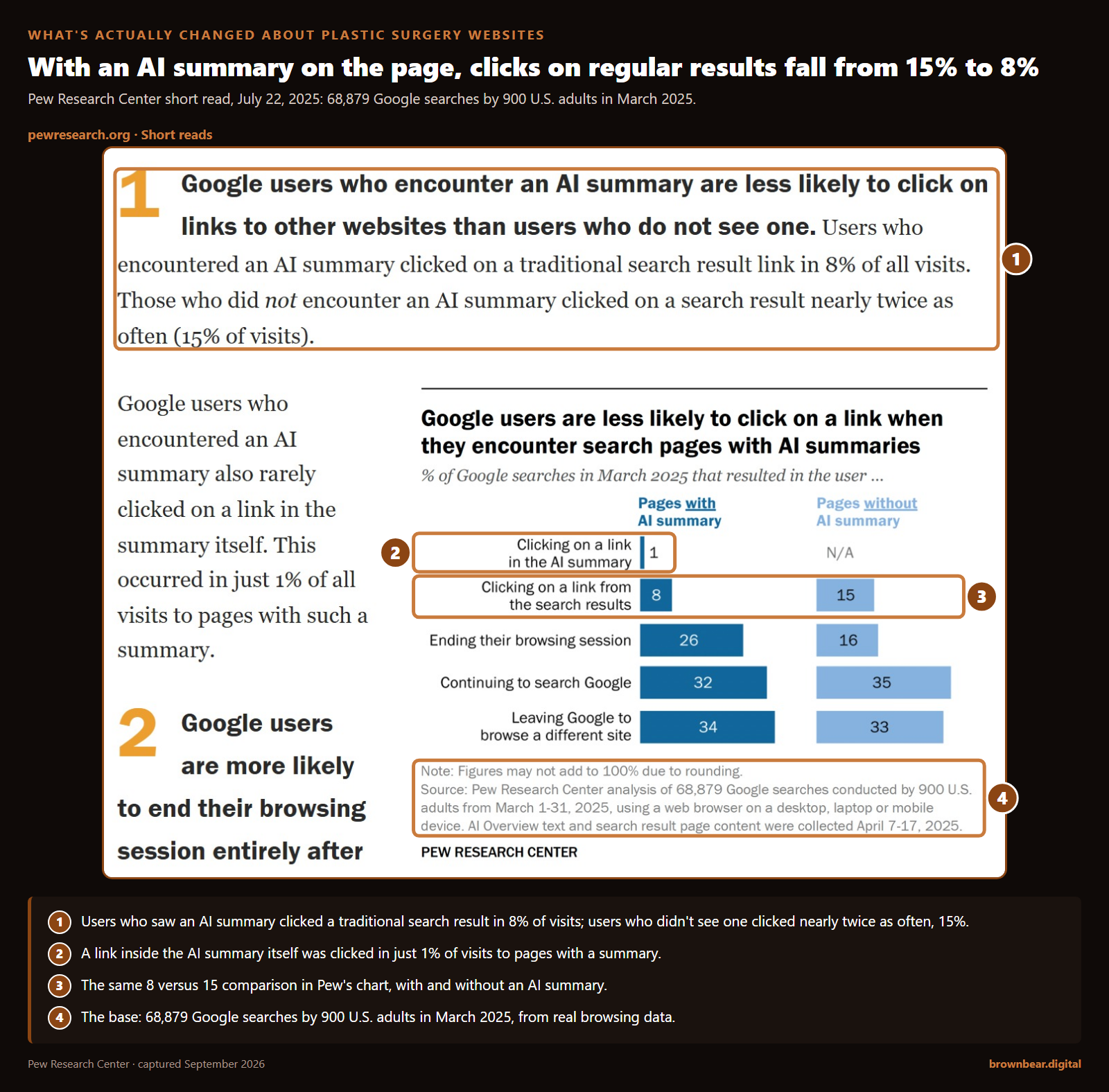
First, AI Overviews. Google now generates an AI summary at the top of many medical searches, pulling from sources it judges credible. When the Pew Research Center tracked the real browsing of 900 U.S. adults in March 2025, people who saw an AI summary clicked a traditional result in 8% of visits, against 15% when no summary appeared, and clicked a link inside the summary in just 1%.¹ For high-intent procedure queries like "is rhinoplasty safe over 50" or "how long is BBL recovery," the AI Overview is now where the patient lands. If your website isn't the kind of source the Overview pulls from, you're effectively invisible for that query.
In the AI visibility audits we run for practices, the split is predictable. Big authority sites such as Mayo Clinic and the American Society of Plastic Surgeons now own the AI answers for head-term definitions like "what is breast augmentation." Procedure-plus-location and cost questions still surface individual surgeons, because Google and the language models infer local intent. That second group of queries is the one a practice website can still win.
Second, the language-model layer. Patients now research surgeons using ChatGPT, Perplexity, Claude, and Gemini in addition to Google. These tools don't behave like a search engine: they synthesize. When a patient asks Perplexity "who are the best rhinoplasty surgeons in Dallas," the answer reflects what the model has indexed, what it can verify in real time, and which practices it can cite with confidence. Practices that haven't been built to be citable by AI engines simply don't appear in those answers.
Both shifts reward the same thing: websites where every claim is verifiable, every credential is structured, and every piece of evidence is original. Both punish the same thing: surface design built on stock content, generic claims, and unverifiable expertise.
Why Most Plastic Surgery Websites Still Look Great and Convert Poorly
You already know the pattern. The site has a video header, a clean type system, an organized procedure menu, before-and-after galleries, and a contact form. It cost the practice somewhere between $15,000 and $40,000. It's been live for two years. Traffic is flat or declining. Consultation requests are flat or declining. The agency that built it suggests new content, then suggests paid ads, then suggests a redesign.
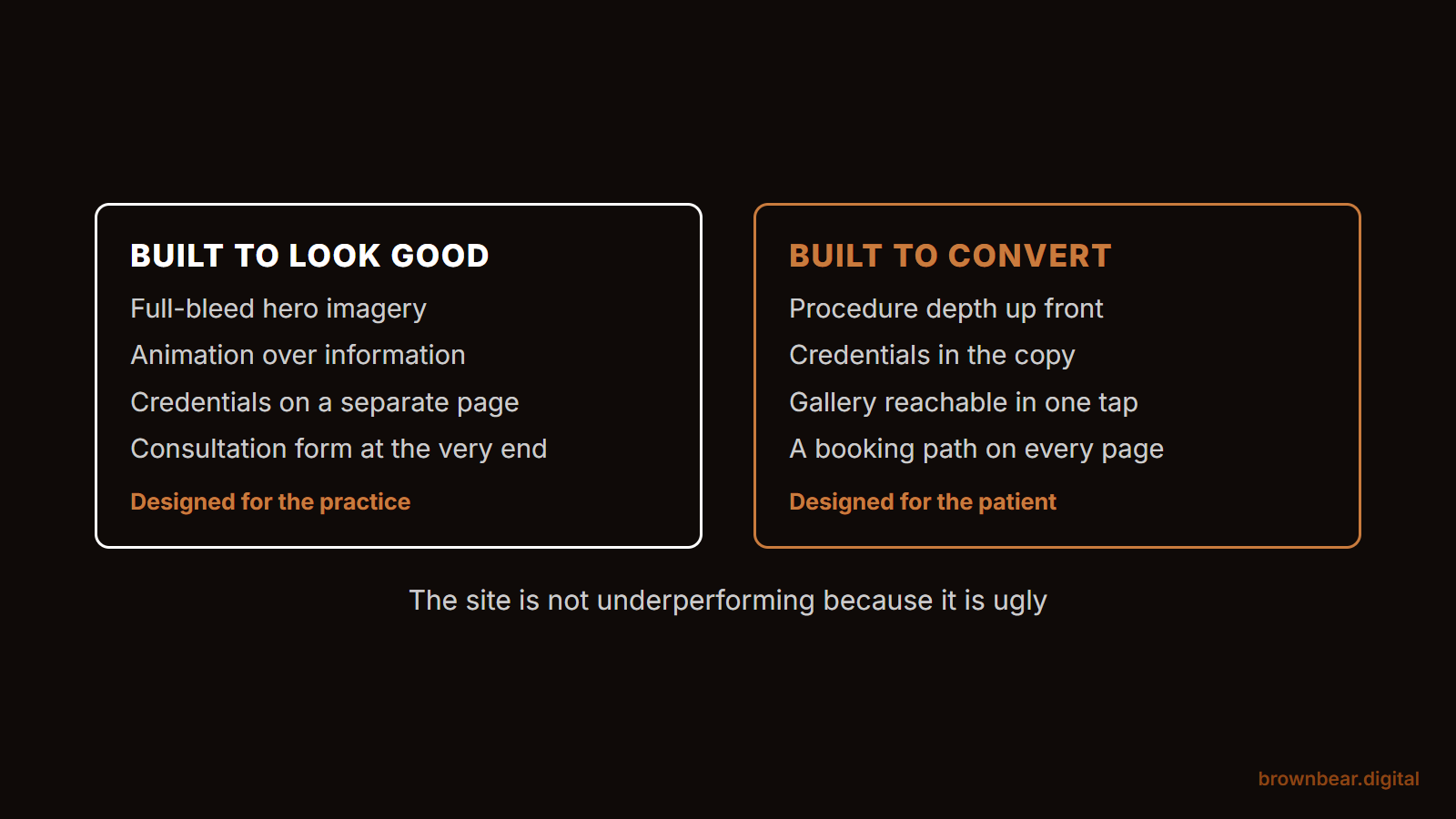
The diagnosis is almost always the same: the site was designed for the patient who already trusts you, someone who arrived because of a referral or a Google ad and just needed a smooth path to booking. It was not designed for the patient who is comparing you against four other surgeons or for the AI engine deciding whether you're a credible source.
What's missing isn't usually visible. It's the trust-signal layer underneath the design: the structured credentials, the verifiable authorship, the original evidence, the citation patterns AI engines use to decide who they're confident citing. That layer is invisible to the patient and invisible to the practice. But it's the entire conversation when Google's quality systems and AI Overviews evaluate your site.
Picture a three-surgeon practice whose site won a design award two years ago. A patient comparing breast augmentation surgeons opens it on her phone, waits out a slow video header, and taps through to the About page to confirm board certification, which she finds in a paragraph near the bottom. She checks the American Board of Plastic Surgery's lookup instead, then books with the surgeon whose credentials, labeled cases, and consultation button were all visible on the first screen. Nothing on the award winner was wrong. It just made her do the verifying herself.
If that sounds like your current site, our breakdown of a plastic surgery website not converting consultations walks through the seven usual causes, and our guide to the plastic surgeon homepage covers the page where most of them show up first.
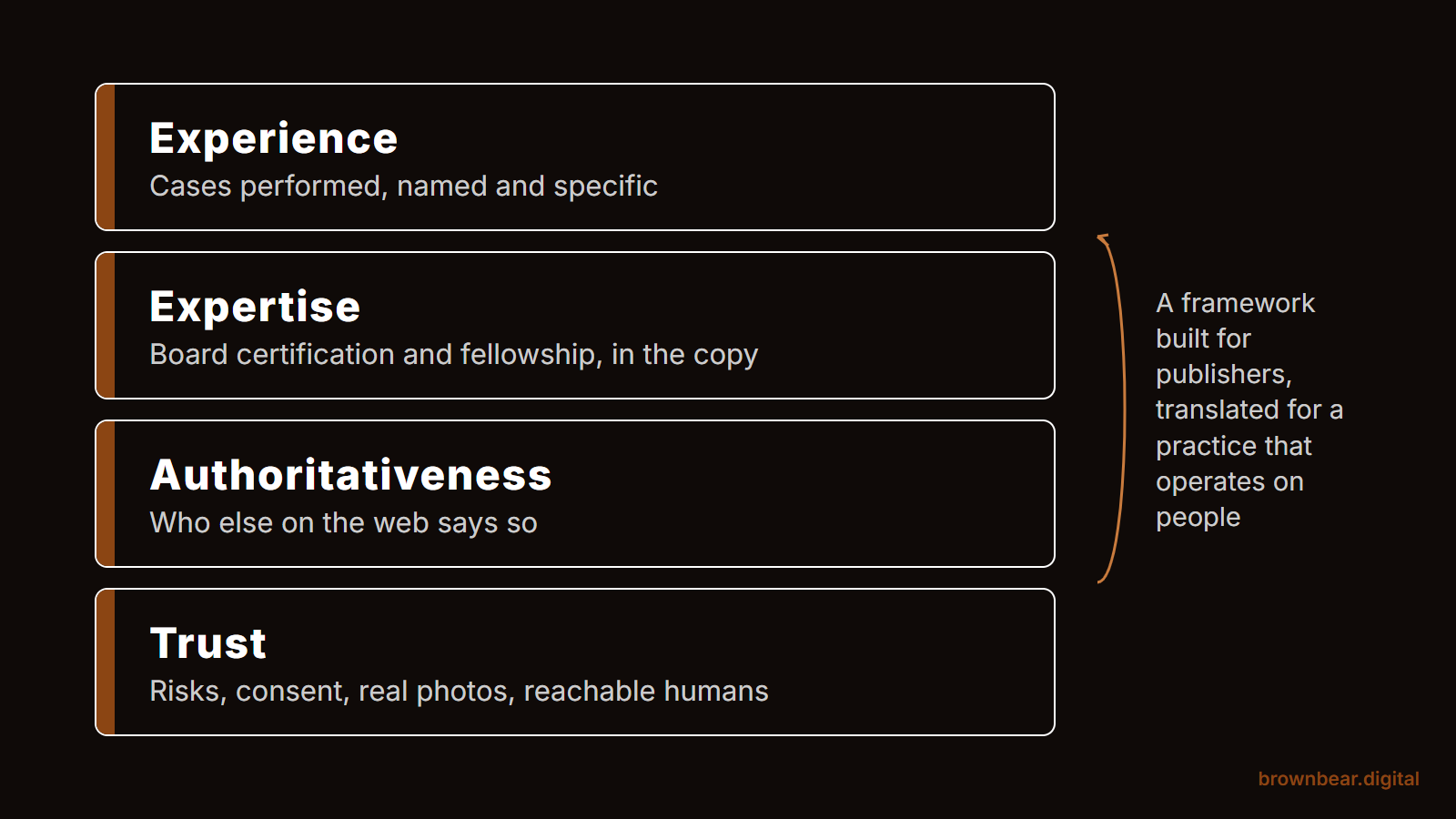
The E-E-A-T Stack, Translated for a Plastic Surgery Practice
E-E-A-T is the framework Google's quality raters use to evaluate YMYL content. It is not a direct ranking factor (Google has been clear about that), but it shapes the signals that are ranking factors, and it's the framework AI Overviews and language models effectively replicate when deciding which sources to trust.
For a plastic surgery practice, each pillar maps to specific assets that should already exist on your website but usually don't. This section stays on the website build. The framework itself, including the off-site authority most practices neglect, is covered in our guide to E-E-A-T for plastic surgery practices.
Experience
Experience is the most recently added pillar (the second "E"), and for medical practices it's the highest-leverage one. It asks: has the person creating this content actually done the thing?
For a plastic surgeon, "experience" lives in three places on a website:
- Original before-and-after galleries. Stock images and licensed gallery photos are easy to find elsewhere on the web and prove nothing about your work. Your own galleries, patients you operated on, photographed in your office, with metadata that ties them to a procedure and a surgeon, are the strongest experience signal you have. Most practices have these and present them poorly. Photos should be tagged with the procedure, the surgeon, and ideally the patient's stated motivation and outcome. Not the patient's identity, but enough context that the gallery reads as evidence rather than decoration.
- Real consultation footage. A 90-second video of a surgeon explaining a procedure they've performed hundreds of times reads as experience in a way that text never quite does. Publish a transcript alongside it, because the transcript is text a search system can read and quote even when it never plays the video.
- Named patient stories. A consented testimonial from a real patient: first name, age range, procedure, what they were worried about, what changed. That's several orders of magnitude stronger than "Our patients love us!" On a website, this looks like dedicated patient story pages, not floating quotes on the homepage. Get the patient's signed, written consent for the story and every photo before anything is published.
Expertise
Expertise is the credentialing pillar, the part most surgeons think they've already covered because they list "board certified by the American Board of Plastic Surgery" somewhere on their About page. The problem is that the listing is unstructured: a sentence in a paragraph that AI engines have to extract and verify the hard way.
Expertise should be surfaced two ways. First, in plain language, on every page where it matters: at the top of the surgeon bio, on the homepage hero, in the meta description. Second, and this is what most plastic surgery websites skip, in structured data: an IndividualPhysician block for each surgeon carrying the name, specialty, NPI number and practice, layered with Person properties for training and the outside profiles that confirm it. Markup doesn't make a claim true. It makes a true claim easy to match against the board, hospital and society listings that confirm it.
Expertise also lives in the depth of the procedure pages. A rhinoplasty page that walks through technique selection (open vs. closed, structural grafting decisions, ethnic considerations) reads as expert. A page that lists "rhinoplasty: a procedure to reshape the nose" reads as a directory listing.
Authoritativeness
Authoritativeness is what other credible sources say about the surgeon. It's the hardest of the four to manufacture and the one where most practices simply don't have a strategy.
Three things signal authority for a plastic surgery practice:
- Citations from credible third parties. Press mentions, peer interviews, journal authorship, conference speaking. These need to be linked from the website (an "In the press" section is the table-stakes version) and ideally syndicated as structured Article references.
- Internal links from credible content elsewhere on the site. A robust blog with original commentary on procedures, recovery, and decision-making, written by the surgeon and not a content mill, creates an internal authority graph that AI engines read.
- External links to your site from credible sources. ABPS profiles, ASPS profiles, hospital affiliations, peer-reviewed journals, and trusted health publications carrying the surgeon's name with a backlink. These are slow to accumulate and impossible to fake. They're also among the strongest authoritativeness signals a practice can earn.
Trustworthiness
Trust is the foundation pillar. Google's guidance on creating helpful, reliable, people-first content says it directly: of the four, trust is the most important. For plastic surgery, trust shows up in places most websites treat as compliance afterthoughts.
- Privacy and consent. A clear, plain-language explanation of how patient photos are obtained, used, and stored. HIPAA language exists for a reason; treat it as a trust signal, not a footer link.
- Accuracy and citations. Medical claims need sources. A recovery-time line on a rhinoplasty page should link to a peer-reviewed or society source, or be labeled plainly as the surgeon's own clinical observation. An unsourced medical claim gives a careful reader, and any system checking it against authoritative sources, a reason to trust the page less.
- Transparency about outcomes. Including the realistic range of outcomes, not just the best ones. Including the conditions under which a surgeon would not recommend a procedure. This reads as trustworthy because it is.
- Clear contact, location, and identity. A real address, real phone number, real surgeon photos (not stock), and a real practice name in structured MedicalBusiness schema. Trust at the most basic level: Google can verify this practice exists and matches what's claimed.
Each of those signals has a page where it does the most work. Pick a page type below to see what it has to prove, what belongs on it, and what to mark up and link.
Trust Signal Placement Map
Every trust signal has a page where it does the most work. Pick a page type to see what it has to prove, what belongs on it, and what to mark up and link. Tick what your page already does.
For informational purposes only; a planning aid, not a guarantee of rankings, AI citations or consultations. Not legal, HIPAA, accessibility compliance, or medical advice. Your ticks stay in this browser tab: nothing is stored or sent anywhere.
Before-and-After Galleries: The Highest-Leverage Trust Signal You Already Own
Four of the seven ranking design guides and agency pages we read in September 2026 mention before-and-after galleries. None of them frame the gallery the way it actually functions: as the highest-leverage Experience signal a plastic surgery website has.
The gallery should not be one page with 200 photos in a grid. That presents the same way a stock image gallery does. The gallery should be:
- Filterable by procedure and by surgeon (if the practice has multiple)
- Annotated with the procedure performed, the surgeon, the timeline (e.g., "1 year post-op"), and ideally the patient's stated goal
- Original, taken in your office, by your staff, on a consistent neutral background. Reverse image search makes a repurposed photo easy to spot, for a patient as much as a search system.
- Linked back from procedure pages so the technique discussion on a procedure page connects directly to the evidence
- Accompanied by surgeon commentary: a short note from the surgeon on what made this case interesting, the decision-making, the result. This is where Experience meets Expertise
The shift here is treating the gallery as content the practice has authored, not as a portfolio to display. Authored content gets cited.
Almost nobody does this, which is what makes it leverage. In our 50-procedure study of ranking before-and-after galleries, only 35% number their cases and 15% state a post-op interval on any photo. In our before-and-after rankings case study, a Los Angeles-area group's gallery pages went from 13 to 52 top-3 rankings for before-and-after searches after the rebuild. The full documentation standard, from photography and case data to consent language and gallery schema, is in our guide to plastic surgery gallery best practices.
Surgeon Bios That Hold Up Under AI Overview Scrutiny
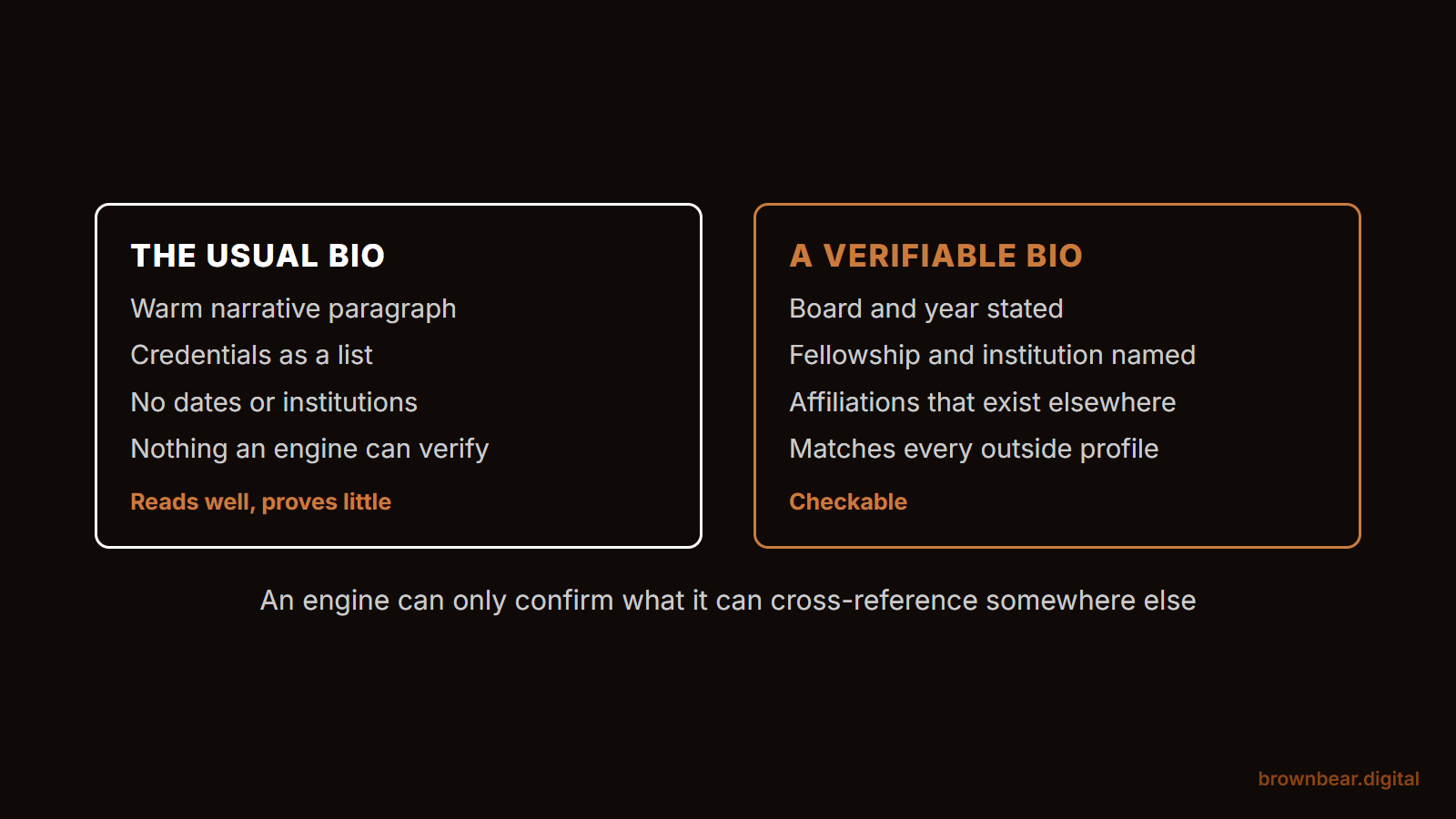
Every plastic surgery website has an About page. Most are written like a CV translated into marketing copy: name, training, awards, "Dr. Smith is committed to..." The problem with this format is that none of it is structured for verification.
Patients already run these checks, just not on your site. In the r/PlasticSurgery threads that rank for how to vet a surgeon, the same advice repeats: look the surgeon up on the American Board of Plastic Surgery's site, check the state medical board, vet medical school and residency, and ask to see before-and-after photos. We call the fix the Verification Walk: for every check a patient runs somewhere else, the bio puts the answer one click away.
| Patient check | Where they run it | What the bio puts one click away |
|---|---|---|
| Is the surgeon board certified? | The ABPS verify-certification lookup | The board named in text, the year certified, and a link to the lookup |
| Is the license clean? | The state medical board's license search | License state and number, linked to that search |
| Where did they train? | Residency and fellowship program pages | Institutions spelled out exactly as those programs list them |
| Can I see their own results? | The gallery, or the consultation | A link to that surgeon's own labeled cases |
| What do other patients say? | Google, RealSelf and other review sites | Links to those profiles, rather than hand-picked quotes |
A surgeon bio that AI engines verify cleanly looks like this:
- Name and credentials in the H1, e.g., "Jane Smith, MD, FACS, Board-Certified Plastic Surgeon"
- NPI number and ABPS certification, displayed (not hidden) and ideally encoded in IndividualPhysician schema
- Medical school, residency, fellowship with institution names spelled out, exactly as the hospital and program listings spell them
- Affiliations with the American Society of Plastic Surgeons, hospital systems, academic appointments. Each linked.
- Press, publications, speaking: actual links to actual sources. A claim that the surgeon "has been featured in major publications" without a link reads as unverified. If it can't be linked, cut it.
- A real photo, ideally multiple, ideally including operating room or office context
- A first-person section: 200 to 400 words from the surgeon in their own voice on their philosophy of care. This is where personality survives the verification gauntlet.
The bio should live at a clean URL (/about/dr-smith or /surgeons/jane-smith), be linked from every procedure page they perform, and be the canonical source for that surgeon's identity across the site. For how to write the bio itself, sentence by sentence, see our guide to the plastic surgeon About page.
The Schema Markup Most Plastic Surgery Websites Are Missing
Schema markup is the structured data layer that tells search engines and AI systems what your content actually is, not just what it says. Three schema types are essential for a plastic surgery practice and absent from the majority of practice websites:
IndividualPhysician schema
on each surgeon's bio page. Schema.org defines Physician as an organization type, a doctor or a physician's office, so a single surgeon is better described with its IndividualPhysician subtype: medical specialty, NPI, hospital affiliation and practice, paired with Person properties for training, memberships, and sameAs links to the profiles that confirm them. This is the most underused trust signal on the practice sites we study.
MedicalProcedure schema
on each procedure page. Schema.org's type covers the procedure type, body location, how it's performed, preparation and follow-up. It tells a search system exactly which procedure the page is about, so the page can be matched to the question a patient asks.
FAQPage schema
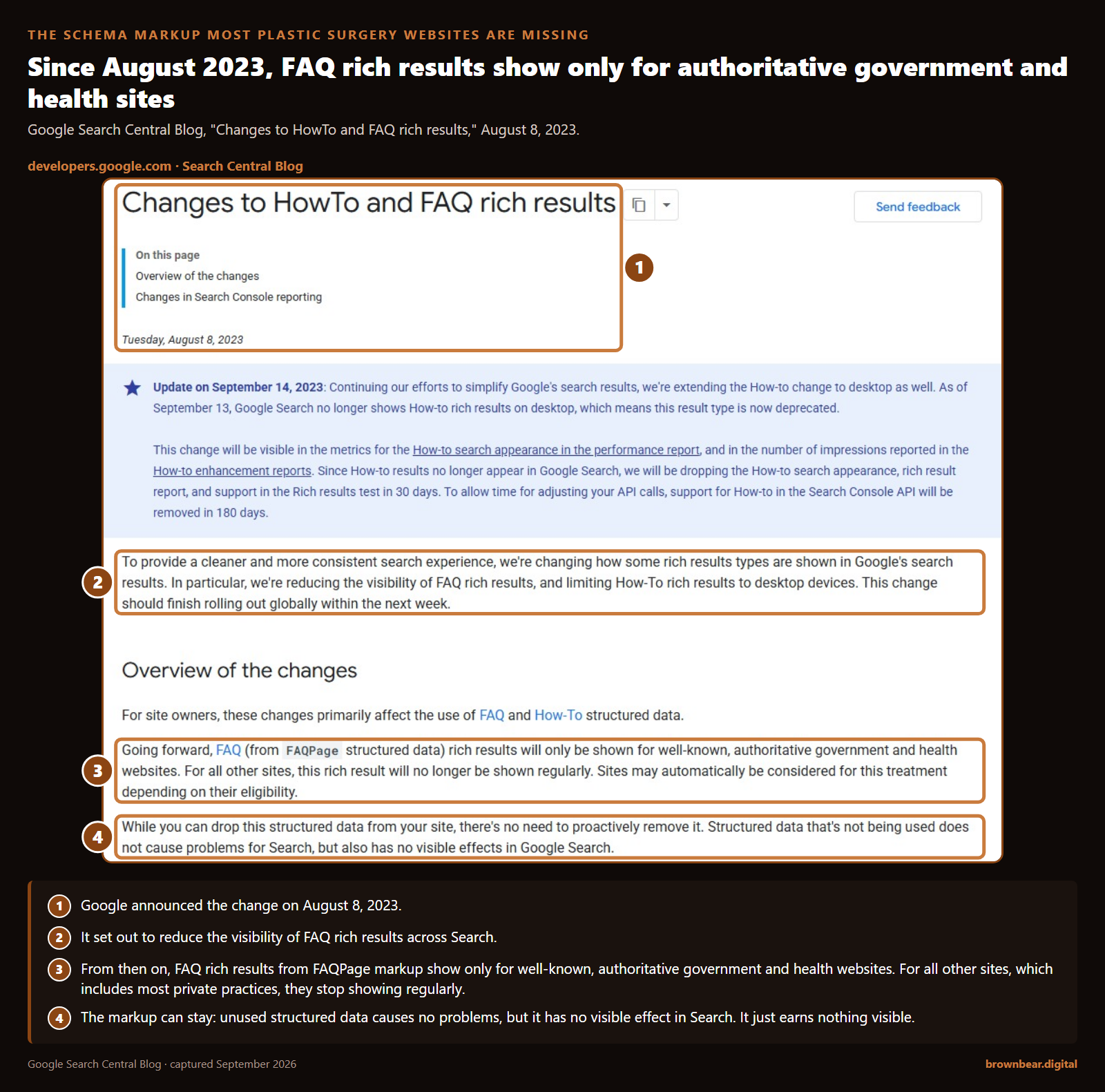
where procedure pages answer frequently asked questions, with a caveat most agencies skip. Since August 2023, Google shows FAQ rich results only for well-known, authoritative government and health sites, so for most practices the markup no longer earns a visible SERP feature. The questions still matter. Written as direct answers in visible text, they're what AI Overviews and chat assistants lift; the markup is a tidy label on top, not the reason the answers get used.
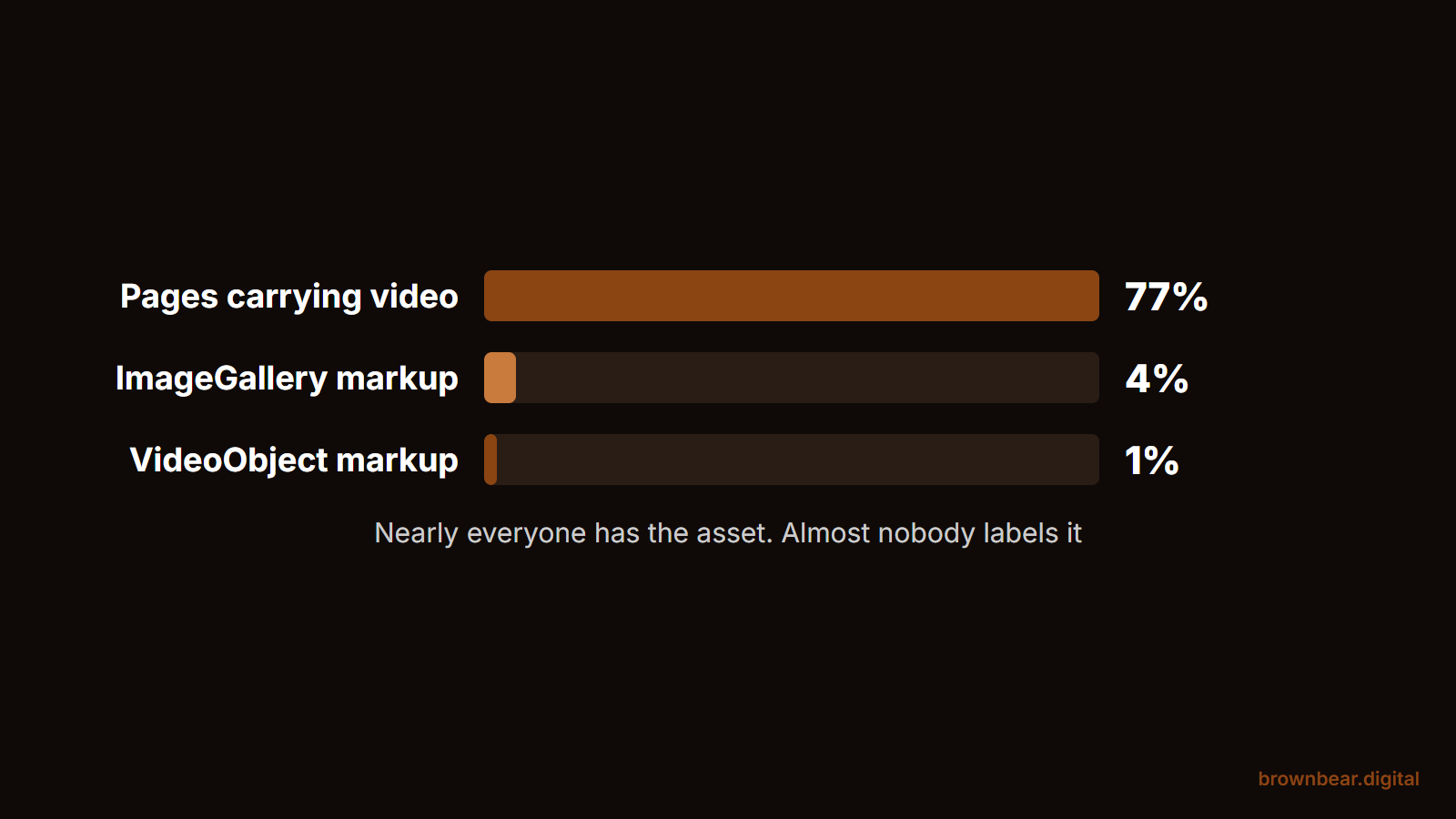
"Absent from the majority" is not a figure of speech. Across the #1-ranking pages in our 101-city procedure page study, 94% carried some JSON-LD, but only 17% used MedicalProcedure, only 31% marked up their FAQ content, and of the 33 surgeon Person entities found across all 101 pages, exactly one linked out to external profiles with sameAs. Galleries are emptier still: ImageGallery markup appears on 4% of ranking gallery pages and VideoObject on 1%, while 77% of them carry video.
That same study found six #1 pages ranking with no structured data at all, and it reads markup as table-stakes hygiene rather than a ranking lever. That matches what we see in client work: crawlable, clearly structured page content moves AI visibility more than markup does, and a heavy JavaScript build that an AI crawler can't render undoes both. Schema is worth getting right. It isn't a silver bullet.
One markup to leave off entirely: self-served review stars. Google stopped showing review rich results for LocalBusiness and Organization markup about the business itself in 2019, so an AggregateRating block on your own site earns no stars. In the same 101-city study, 37 of the #1 pages still carried one. Link to your Google and third-party review profiles instead, and ask every patient for a review the same way, with no incentives and no filtering for the happy ones, which is what Google's contribution policy requires.
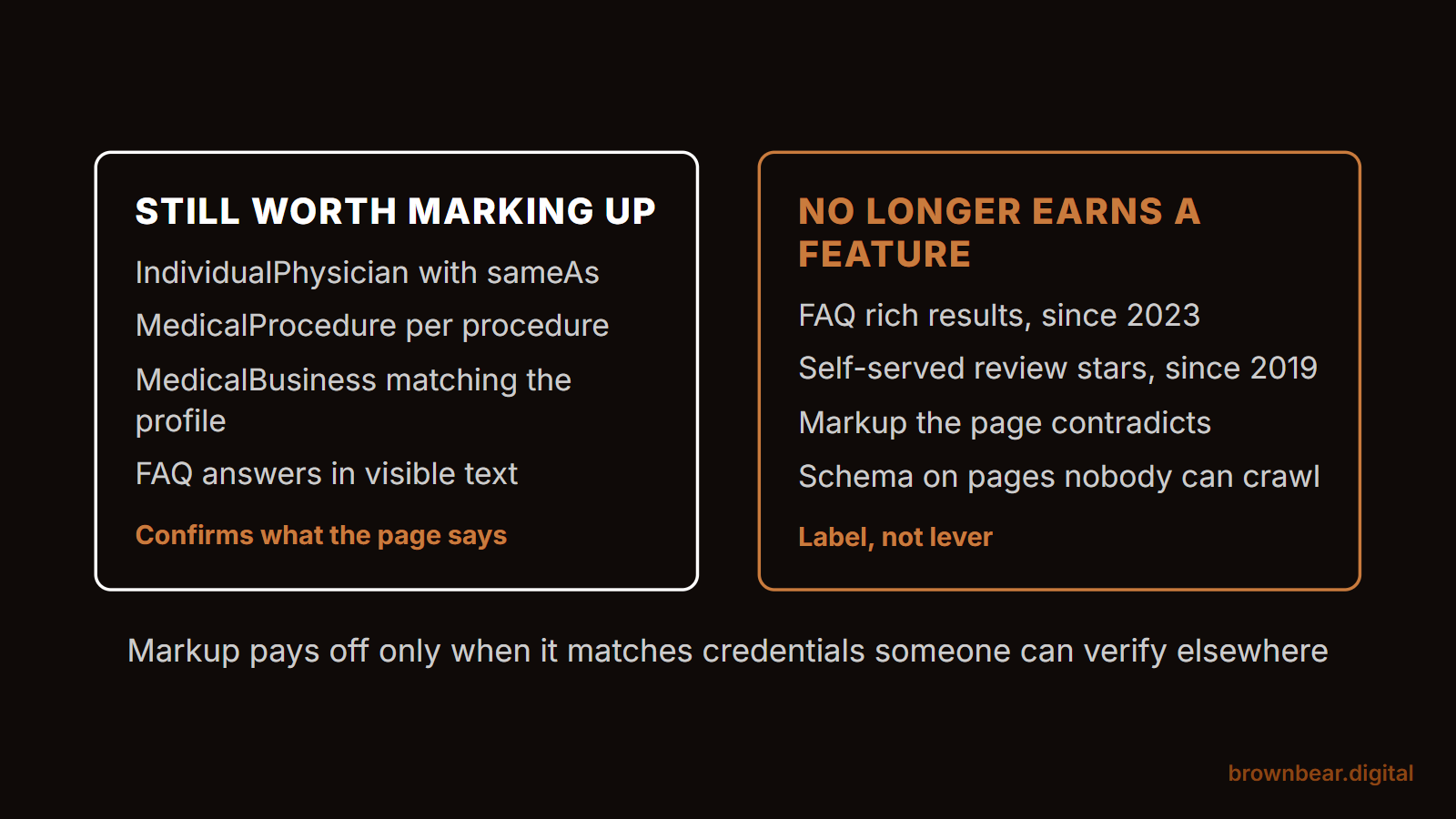
Schema is invisible to the patient and useful to the machine only when it matches what the page visibly says. It belongs in the technical scope of any new website build, not as an afterthought.
Mobile, Speed, and the Core Web Vitals Threshold
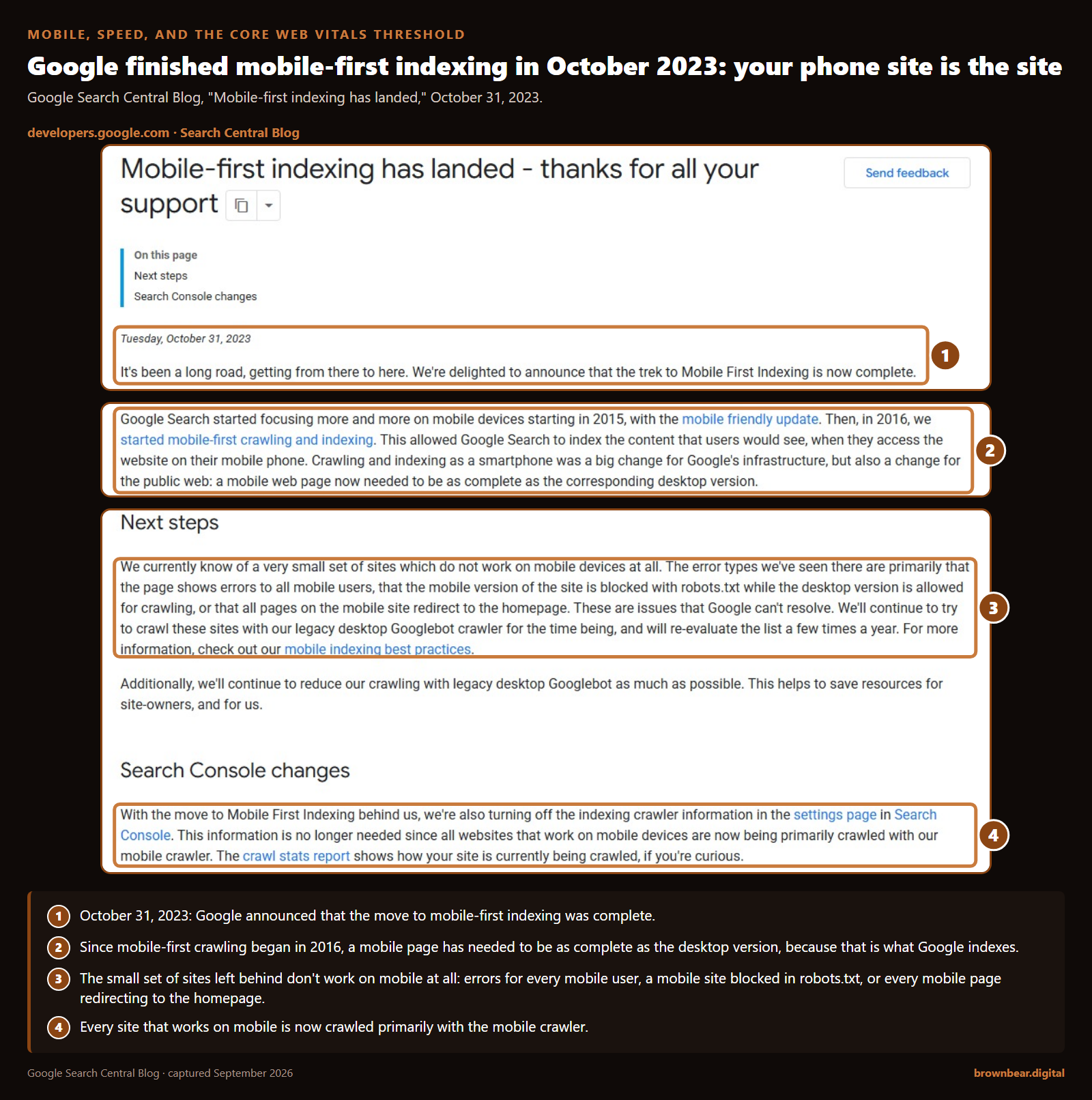
Mobile responsiveness shows up in nearly every ranking guide and in Google's own AI Overview for this search, and it's still essential. Google made mobile-first indexing the default for new sites in 2019 and finished moving the whole web over in 2023, and the Core Web Vitals targets (LCP of 2.5 seconds or less, INP under 200 milliseconds, CLS of 0.1 or less) are part of how Google assesses page experience.
For plastic surgery practices specifically, the bottleneck is almost always image weight from the gallery. A 12MB unoptimized hero image on a procedure page is a Core Web Vitals failure that no amount of E-E-A-T compensates for. Image optimization (WebP format, responsive sizes, lazy loading on galleries) is the highest-ROI technical fix on most plastic surgery websites we audit.
Accessibility Belongs in the Trust Layer
An accessible site is one a patient can use with a screen reader, a keyboard, zoomed text, or a weak connection, and for a practice it's both a trust signal and a legal exposure. The Department of Justice's guidance on web accessibility and the ADA says businesses open to the public need websites people with disabilities can use, and it points to the Web Content Accessibility Guidelines (WCAG) as helpful technical guidance for getting there.
Galleries and forms are the usual failure points on plastic surgery sites: hundreds of images with empty alt text, lightboxes a keyboard can't close, filters that only work with a mouse, and consultation forms whose fields have no labels.
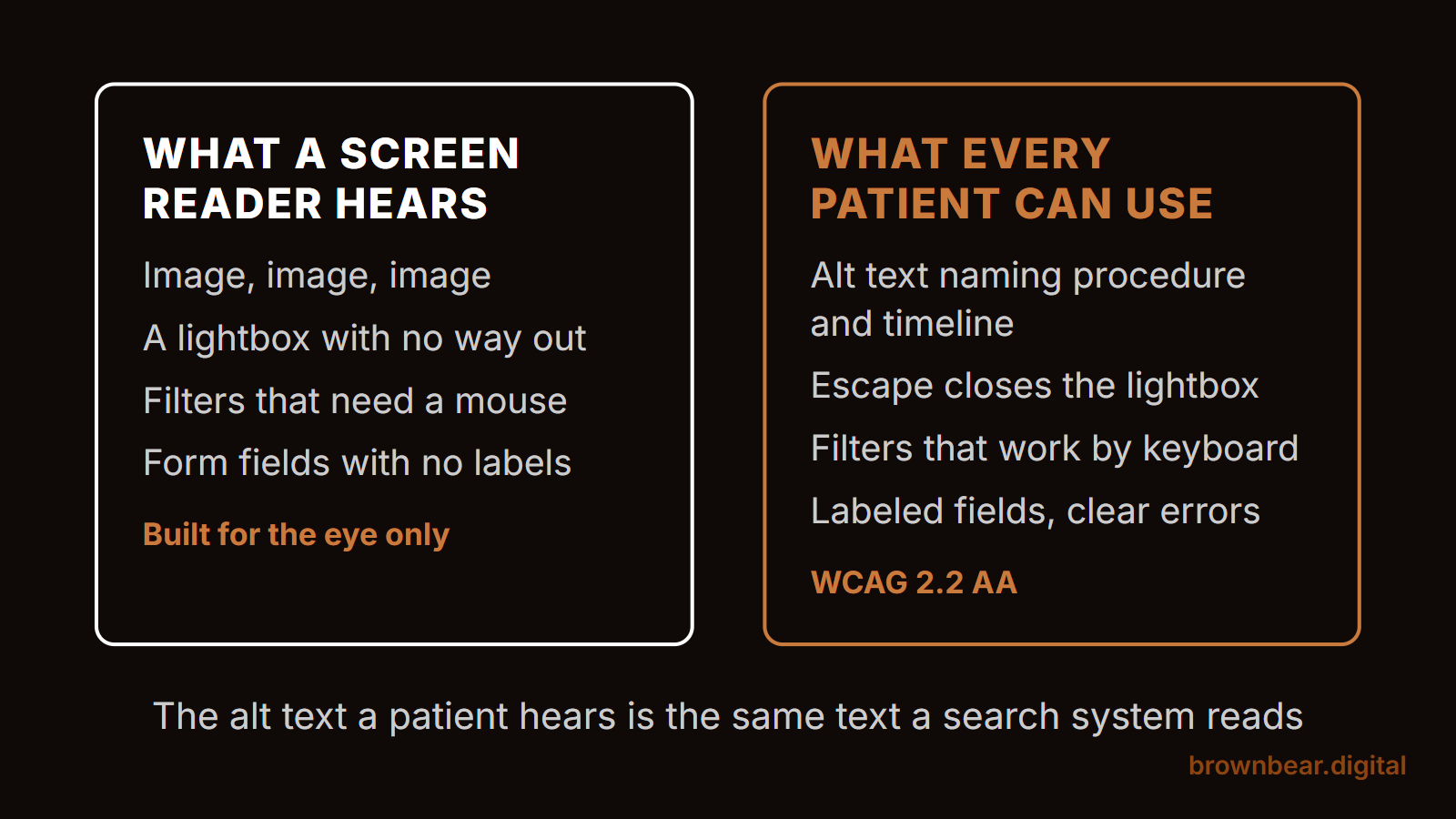
Say a patient who relies on a screen reader lands on your rhinoplasty gallery from an AI Overview. Each thumbnail announces itself as "image," the lightbox traps her focus, and the consultation button sits in a part of the page she can't reach. She leaves, and nobody on your team ever learns why. Alt text that names the procedure and the timeline fixes the first problem, and it's the same text search systems read.
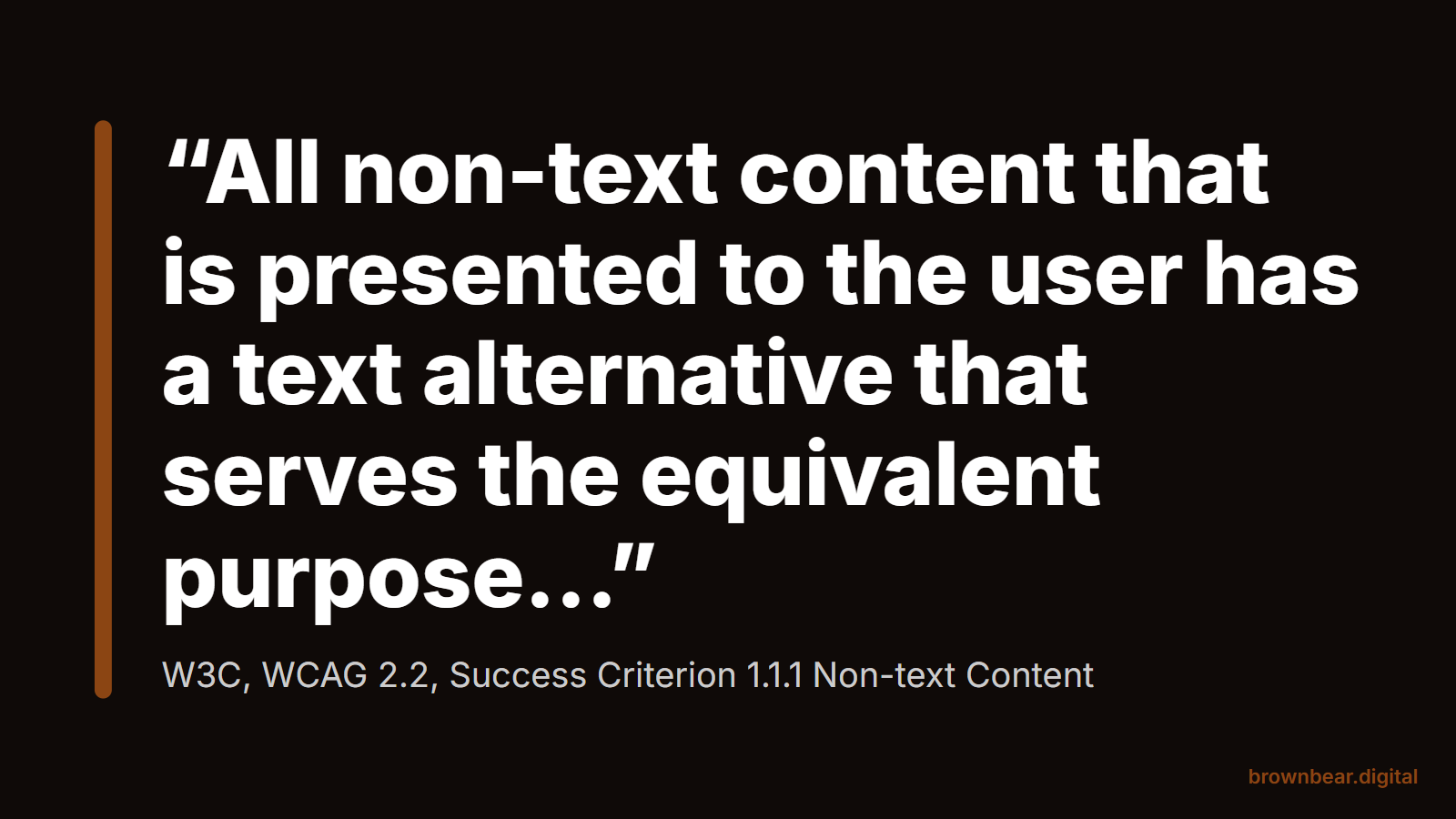
If you're building new, write WCAG 2.2 AA into the contract and ask for an accessibility audit report before launch. If you're keeping the current site, start with the gallery and the contact form, the two places where a patient either sees your work or reaches you.
Branding and Visual Design Without the Clichés
Plastic surgery branding has a cliché problem. Soft pastels, rose gold accents, a script font for the surgeon's name, an idealized stock photo of a woman touching her face. It's competent. It's also forgettable, and increasingly, it's a signal that the practice outsourced their identity to the same agency as the eight other practices nearby.
Strong design for a plastic surgery practice in 2026:
- Carries the surgeon's actual personality and the practice's actual point of view
- Uses original photography of the practice, the team, and the surgeon at work
- Has a typographic identity that isn't shared with every dental office on the block
- Uses color choices grounded in the practice's specialty (a reconstructive practice and an aesthetic practice should not look the same)
Branding doesn't directly affect E-E-A-T. It affects whether the patient who arrives via an AI Overview stays. Design that reads as authentic compounds with trust signals; design that reads as templated undermines them.
Custom vs. Template: What You're Really Paying For
The custom-vs-template debate that dominates competitor pages misses the point. A custom WordPress theme is not better than a template because it's custom. It's better, when it is, because the agency building it had room to engineer the trust-signal layer (schema, structured bios, original galleries, procedure-page architecture) into the foundation rather than retrofitting it.
A practice on a template platform with strong E-E-A-T architecture will outperform a custom build that ignores it. A custom build with both is the strongest position. The decision should be driven by which agency can deliver the trust-signal architecture, not by whether the design is bespoke.
Practical price ranges:
- Template-based with light customization: $5,000 to $12,000. Acceptable for new practices testing the market; insufficient for established practices.
- Custom build without specialized E-E-A-T architecture: $15,000 to $25,000. The most common option and the most common point of failure: you're paying for design, not discoverability.
- Custom build with E-E-A-T and AI-search architecture: $25,000 to $50,000+. The cost is justified when the trust-signal layer is genuinely engineered, not bolted on.
Which tier is yours depends less on budget than on where the practice is. If you're opening a solo practice, a template with the trust layer engineered in is enough for year one; spend the difference on original photography and your first documented cases. If you're an established practice with years of cases sitting behind a flat site, the middle tier is the trap: either pay for the architecture or keep the current design and retrofit the trust layer into it. If you're a group with several surgeons or locations, the architecture is the job, because every surgeon needs a bio, their own cases, and markup that ties them to the right procedures and offices.
How AI Overviews Evaluate Plastic Surgery Websites, and What to Fix First
Nobody outside Google can see how AI Overviews choose their sources, but across the practice sites we audit, the pages we see cited on plastic surgery queries share five traits:
- Verifiable surgeon identity. Sites where the surgeon's credentials can be verified in structured data and cross-referenced against ABPS, ASPS, or hospital records are the ones we see cited; sites where they can't rarely are.
- Direct, factual answers to specific procedure questions. A page that answers "how long does rhinoplasty recovery take" in the first paragraph, then expands, gets cited. A page that buries the answer in the eighth paragraph after a marketing intro doesn't.
- Original evidence. Original photos, original commentary, original outcomes data. Pages that aggregate publicly available information without adding anything do not get cited as primary sources.
- Citation hygiene. Pages that link out to credible medical sources (peer-reviewed journals, ABPS, ASPS, NIH) for any factual claim get treated as more authoritative than pages that make unsourced claims.
- Recency. A visible "Last updated" date on medical content, backed by real revisions rather than a date bumped on every save.
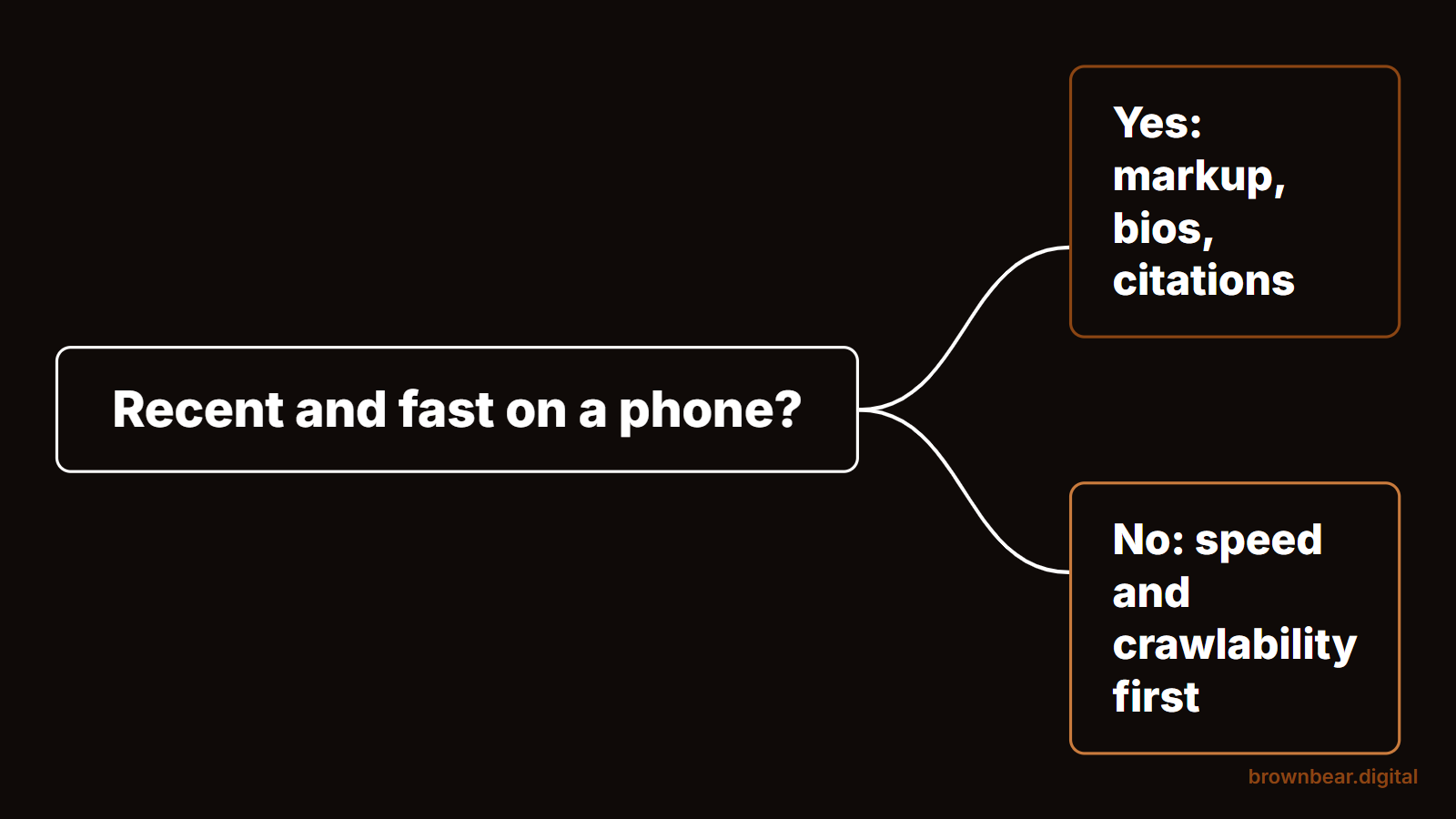
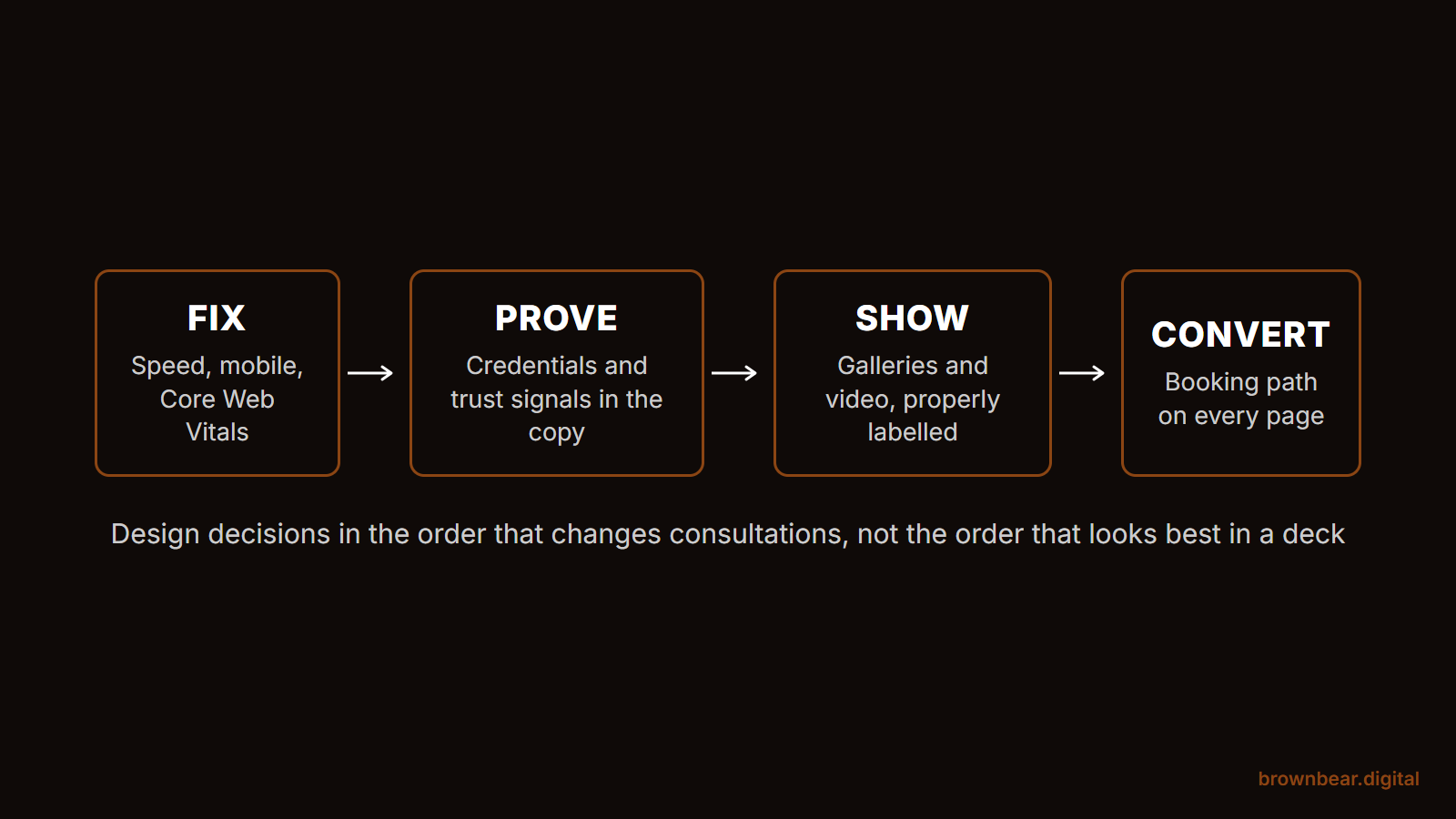
The fastest fixes for an existing plastic surgery website, in priority order: add structured data for the surgeon and procedures; add or rebuild the Author/Surgeon bio page; add citations to procedure-page claims; surface the "Last updated" date; replace stock or repurposed imagery with originals.
That order assumes the site itself is sound. If yours is less than three years old and loads quickly on a phone, follow it as written. If it's older, built on a heavy page builder, or slow on mobile, fix speed and crawlability first, because nothing else registers until the pages load and read cleanly.
Say your rhinoplasty page opens with three paragraphs on the practice's philosophy before it says how long swelling lasts. Move a two-sentence answer, sourced or labeled as the surgeon's observation, to the top, keep the philosophy below it, and the page becomes something an Overview can quote without changing a word of the brand voice.
A 16-Point Checklist for Your Next Redesign
Before signing the contract:
- Will the build include IndividualPhysician and Person markup for every surgeon, with sameAs links to their board, society and hospital profiles?
- Will every procedure page get MedicalProcedure schema?
- Will procedure-page FAQs be written as direct answers in visible text, with FAQPage markup as an optional label rather than a promised rich result?
- Is the surgeon bio architecture treated as a primary deliverable, not a side page?
- Is the gallery filterable by procedure and surgeon, with annotated images?
- Are procedure pages required to include cited sources for medical claims?
- Is the agency producing original photography or sourcing stock?
- Is the surgeon producing original written commentary, or is content outsourced?
- Will Core Web Vitals be tested and certified before launch?
- Will the site include a "Press, publications, and speaking" section linked from each surgeon bio?
- Is there a content plan for ongoing E-E-A-T signal building (blog, case studies, peer references)?
- Will the site include MedicalBusiness schema with verified address and contact?
- Will medical content show a "Last updated" date that changes only when the content does?
- Does the contract specify ownership of code, content, and photography?
- Will the build meet WCAG 2.2 AA, with an accessibility audit report delivered before launch?
- If the new site replaces an old one, is there a page-by-page redirect map and a post-launch check, the steps in our website migration checklist?
Any agency that can answer all 16 with a confident "yes" has thought about your website the way Google's quality systems and AI Overviews now think about it. Any agency that hesitates on more than three of them is selling design, not discoverability.
Take the list into your next agency meeting and score the answers as you go.
Redesign Contract Scorer
Put the sixteen questions to the agency, then tick each one it answered with a confident, specific yes. A vague "we can do that" does not count. The scorer tells you what you are actually buying and hands you the follow-up question for every gap.
For informational purposes only. The score counts answers to the article's checklist; it does not measure an agency's quality or predict rankings, and it is not legal, contract, accessibility compliance, or medical advice. Your ticks stay in this browser tab: nothing is stored or sent anywhere.
The Websites That Win the Next Five Years
The plastic surgery practices that will compound traffic and consultations over the next five years aren't the ones with the prettiest websites. They're the ones whose websites are built so that every system between the patient and the booking: Google's quality raters, AI Overviews, language models, the patient's own due-diligence research, can verify with confidence, that this surgeon is who they say they are, has done what they claim, and is worth recommending.
That isn't a design problem. It's an architecture problem. Solve it once and the design layer above it can change every five years without losing the foundation underneath. Skip it and no design refresh will ever quite work.
If you're scoping a new website, the question to put to every agency you're talking to isn't "what will it look like?" It's "how will this site be legible to AI Overviews, language models, and Google's quality systems eighteen months from now?" The answer to that question is what you're actually buying.
References
-
American Board of Plastic Surgery. (2026). Verify Certification. American Board of Plastic Surgery. https://www.abplasticsurgery.org/public/verify-certification/VerifyCert?section=SurgeonSearch
-
American Society of Plastic Surgeons. (2026). Find a Plastic Surgeon. American Society of Plastic Surgeons. https://find.plasticsurgery.org/
-
Google LLC. (2025). Core Web Vitals. Google Search Central. https://developers.google.com/search/docs/appearance/core-web-vitals
-
Google LLC. (2025). Creating helpful, reliable, people-first content. Google Search Central. https://developers.google.com/search/docs/fundamentals/creating-helpful-content
-
Google LLC. (2023, August). Changes to HowTo and FAQ rich results. Google Search Central Blog. https://developers.google.com/search/blog/2023/08/howto-faq-changes
-
Google LLC. (2026). Review snippet structured data. Google Search Central. https://developers.google.com/search/docs/appearance/structured-data/review-snippet
-
Google LLC. (2023, October). Mobile-first indexing has landed. Google Search Central Blog. https://developers.google.com/search/blog/2023/10/mobile-first-is-here
-
Pew Research Center. (2025, July 22). Google users are less likely to click on links when an AI summary appears in the results. Pew Research Center. https://www.pewresearch.org/short-reads/2025/07/22/google-users-are-less-likely-to-click-on-links-when-an-ai-summary-appears-in-the-results/
-
Schema.org. (2026). IndividualPhysician. Schema.org. https://schema.org/IndividualPhysician
-
Schema.org. (2026). MedicalProcedure. Schema.org. https://schema.org/MedicalProcedure
-
U.S. Department of Justice, Civil Rights Division. (2022, March). Guidance on Web Accessibility and the ADA. ADA.gov. https://www.ada.gov/resources/web-guidance/
-
U.S. Department of Health and Human Services. (2025). Health Information Privacy (HIPAA). HHS. https://www.hhs.gov/hipaa/index.html
¹ Pew Research Center, "Google users are less likely to click on links when an AI summary appears in the results," July 2025.
Work with Brown Bear on Your Practice's Digital Presence
A website that can't be read by AI Overviews, quality raters, or patients doing due diligence isn't a design asset. It's a liability. Brown Bear Digital builds plastic surgery websites with the trust architecture underneath: credentialing signals, E-E-A-T-compliant content structure, schema markup, and the surgeon bio and gallery systems that tell every evaluating system your practice is exactly who it claims to be. Our web design services, plastic surgery SEO, and conversion optimization cover the full stack, alongside our broader plastic surgery marketing work. Reach out to talk through what your current site is missing.
Written By
Founder, Brown Bear Digital
Bryan has 15 years of experience across SEO, paid search, and AI search strategy. He founded Brown Bear to give businesses direct access to senior-level search expertise without the agency overhead.
Learn More About BryanGet Found on Google.
Get Cited by AI.
Tell us about your site. We'll send back a proposal for SEO and AI search.