SEM & SEO Strategies for Plastic Surgeons: One Playbook for Both Halves of the Search Page
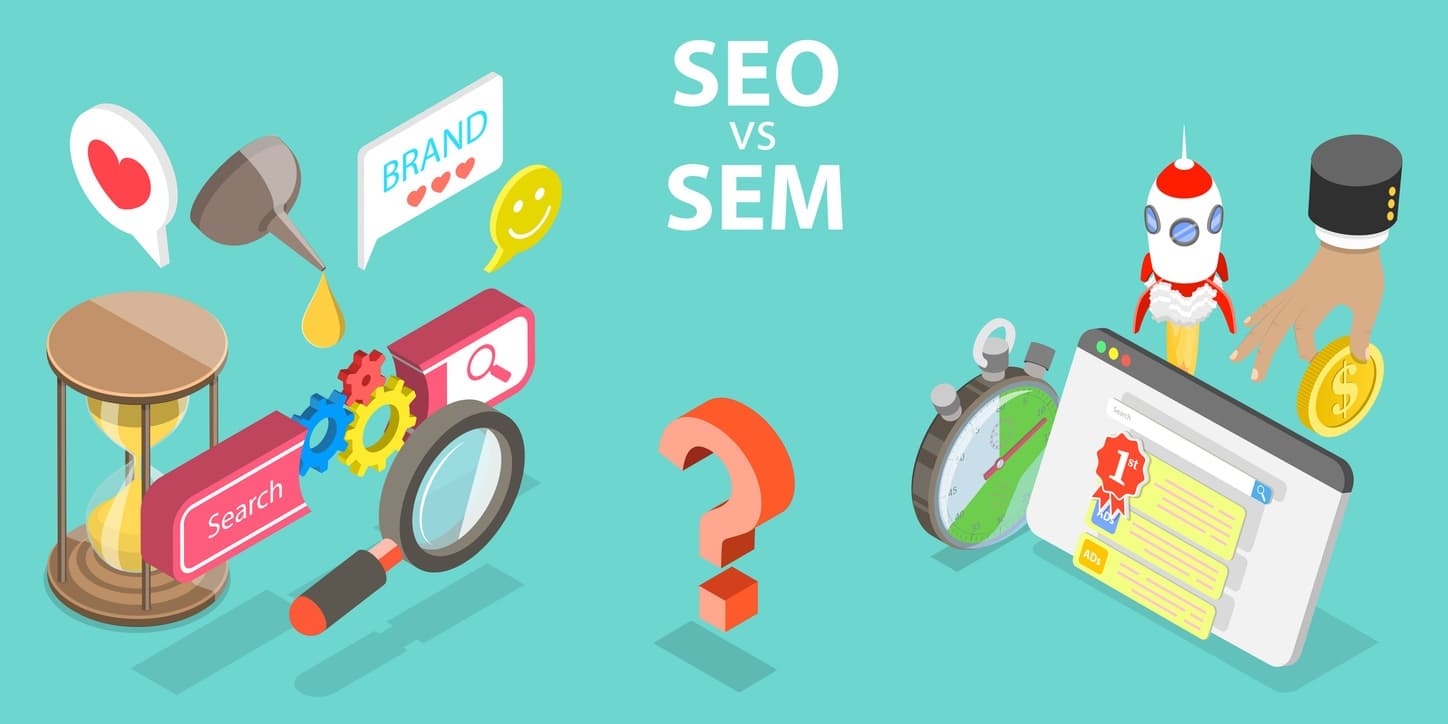
This is Brown Bear's field guide to SEO and SEM for plastic surgeons: how a practice shows up in both halves of the search results page, the organic half and the paid half, and turns searches into booked consultations.
It draws on the client work of Bryan Passanisi, Brown Bear's founder, who runs search and AI-visibility programs for plastic surgery practices and has spent the past two years watching, inside real accounts, how patients find surgeons now. Not how they found them in 2019. How they find them this year, with AI answers sitting on top of the results and ad costs climbing underneath them.
When we say search marketing, we mean both sides of the page: the rankings, map listings, and AI answers you earn, and the Google Ads placements you buy. Most guides pick one side. Patients don't.
If you're opening a new practice and deciding where your first marketing dollars go, this will keep you from buying the wrong thing first. If you've run a practice for years and your rankings keep slipping while your cost per lead keeps rising, this explains what changed. And if you're the practice manager stuck vetting agencies that all promise page one, this gives you the questions that separate the real ones from the rest.
By the end, you'll know which search territory your practice can actually win, what a sane Google Ads budget looks like for your market, how to split spend between SEO and SEM at your stage, and which single number tells you whether any of it is working.
We've grouped it into four parts: how patients actually search for surgeons, the organic playbook (local, content, technical, and AI search), the paid playbook (budgets and policy landmines), and how to measure it all. So let's start with the thing that makes this specialty different from almost everything else on Google.
Key Takeaways
SEO versus SEM is a false choice patients never make
A patient crosses both halves of the search page many times before booking, so the real questions are sequencing and proportion. SEO compounds while SEM is a faucet, so treat them as one system and each channel makes the other smarter.
Expect $8 to $25 per click before the math works
Procedure-term CPCs run roughly $8 to $25, with metro budgets commonly landing between $3,000 and $8,000 a month. Against an $8,000 to $15,000 procedure value the numbers hold up, but only when campaigns are built around consultations rather than clicks.
Your budget split depends on practice stage, not preference
A new practice should lead roughly 70/30 toward SEM while SEO matures over 9 to 12 months. An established practice flips to roughly 60/40 toward SEO and AI-search positioning, with paid concentrated on high-value procedures and the brand name.
Judge every channel on cost per consultation
Traffic, rankings, and impressions are diagnostics, not goals. Wire call and form tracking to source first, then watch the AI-referral segment, because those visitors convert to consultation requests at a higher rate than other channels.
Why Plastic Surgery Search Marketing Plays by Different Rules
Plastic surgery is one of the hardest categories on Google, for one structural reason: the stakes are permanent and the research cycle is long. A patient considering rhinoplasty doesn't search once and book. She searches for weeks, sometimes months, across dozens of queries: the procedure, the risks, the recovery, the cost, the "gone wrong" stories, and finally the surgeons within driving distance. Demand is real and durable; the American Society of Plastic Surgeons counts millions of cosmetic procedures in the U.S. every year in its annual statistics report. But every one of those patients crosses the search results page many times before a consultation.
Three rules follow from that, and they shape everything in this guide.
First, trust outranks cleverness. Google holds medical content to its highest quality standards, and so do patients. Credentials, reviews, and evidence in your copy are ranking assets, not decoration.
Second, you're fighting on two fronts at once. Established authority sites answer the medical questions, and every competing surgeon in your metro bids on the commercial ones. The practices that win pick their territory deliberately instead of spraying budget across both fronts.
Third, the platforms restrict how you advertise. Cosmetic procedures sit inside the health policies of every ad network, which limits targeting and creative in ways most owners discover only after a disapproval email. We cover the specifics in the paid section.
Keep those three rules in mind and the rest of this guide stops being a list of tactics and becomes one decision: where, on a crowded results page, can your practice credibly win?
The False Choice: SEO vs. SEM
Ask ten agencies whether your practice needs SEO or Google Ads and you'll get a sales pitch for whichever one that agency sells. That's the quiet reason nearly every guide on page one covers only SEO: agencies write guides for the retainer they offer. The patient, meanwhile, doesn't know your marketing org chart exists.
Here's what her journey actually looks like. Early on, she's reading educational results and, increasingly, AI answers. In the middle, she's comparing surgeons: maps, reviews, before-and-after galleries. At the end, she types "rhinoplasty consultation [city]" and the top of that page is ads. If you're only doing SEO, you're invisible at the exact moment she's ready to book. If you're only running ads, you never earned her trust during the weeks she was researching, and your click gets treated like an interruption.
So the answer to "SEO or SEM?" is: that's a false choice. The real questions are sequencing and proportion. Which one leads depends on your practice stage and market, and we give you the actual split later in this guide. The principle to hold onto now: SEO compounds and SEM is a faucet. One gets cheaper per patient over time; the other stops the moment you stop paying. A practice that treats them as one system, with ads covering the months SEO needs to mature and organic assets making every ad click convert better, beats a practice that picked a side.
"Generally speaking, when clients run both SEM and SEO together, they tend to see better results because of the SERP domination. There's a reinforcement effect when someone sees a brand multiple times, and that repetition builds credibility. We've watched click-through rates climb when both SEO and SEM are present and the brand is showing up in a positive light. We typically use SEM to kick-start a campaign and get faster results, getting those consultations in the door quickly while SEO plays catch-up and starts generating that free, organic traffic. And it's worth remembering that users are smart. They skip over ads. That's exactly why having the strong organic listing matters."
Bryan Passanisi, Founder, Brown Bear Digital
How Each Channel Makes the Other Smarter
Running SEO and SEM simultaneously creates a performance data loop that neither channel generates alone.
PPC campaigns surface critical intelligence quickly. Within weeks of launching a campaign, a practice knows which procedure keywords produce clicks, which ad copy generates consultation requests, and which landing page structure converts best. This data, earned through paid clicks, would take months to accumulate through organic performance analysis alone.
That intelligence flows directly into SEO decisions. If Google Ads data shows that "natural-looking rhinoplasty [city]" outperforms "rhinoplasty specialist [city]" in click-through rate and conversion, the SEO strategy should prioritize that keyword framing in page titles, headers, and service page content. The paid channel runs the test in weeks; the organic channel benefits from the insight for years.
The feedback also runs the other direction. High-performing organic pages, the ones that rank consistently and generate steady traffic, tell a paid search manager which topics resonate deeply enough that patients find them without a paid push.
Local SEO: Where New Patients Actually Find You
For a practice with one or two locations, local SEO is the highest-leverage organic work you can do, and it usually shows results faster than anything else in this guide. The direct answer on where to focus: your Google Business Profile, your review velocity, and the consistency of your practice data across the web. In that order.
Your Google Business Profile is your real homepage for "plastic surgeon near me" searches. Fill every field, pick the most specific categories, load real photos of the practice and team, and keep procedures listed as services. Reviews are the ranking factor you can influence weekly: build a simple post-visit ask into your front-desk workflow and respond to every review, because response quality is visible to the next hundred readers.
Then there's the unglamorous one: your name, address, and phone number. In the AI-visibility audits we run for plastic surgery practices, the single most common error we find isn't wrong information about the surgeon. It's odd variations of the practice's name, address, or phone number scattered across directories, old profiles, and hospital affiliations. Search engines and AI models reconcile those variants poorly, and a fractured identity dilutes every citation you've earned. It's also the cheapest thing on this list to fix: one audit, one cleanup pass, done at the local level.
Say your practice has moved once and rebranded once in ten years, from "Smith Plastic Surgery" on Oak Street to "Smith Aesthetic Institute" on Main. Right now there are directories, insurance profiles, and a decade of mentions that disagree about who and where you are. To a patient that's invisible. To the systems deciding which practice to surface, you're two half-practices instead of one whole one.
One branch worth naming: if you operate multiple locations, each needs its own profile, its own location page with unique copy, and its own review stream. Sharing one page across locations is the most common multi-location mistake we see, and it caps every location's map visibility at once.
Procedure Pages and the Cost Page Most Practices Won't Publish
Your procedure pages are your money pages: one page per procedure you want to be known for, written in patient language, deep enough to answer the questions a consult would. That much, every guide agrees on. Build them, keep them current, and let your blog exist to support them rather than to chase publishing quotas.
Now the part the other guides won't say. On Quora and in surgeon communities, price transparency gets called one of the scariest parts of marketing a practice, and most practices resolve that fear by publishing nothing about cost. That instinct is exactly backwards for search. Cost queries ("how much does a mommy makeover cost in [city]") are among the highest-intent searches in the entire category, and in our client work they're one of the few query types where big medical authorities don't dominate the AI answers, because national sites can't answer a local pricing question. That territory is winnable by an actual practice. A cost page doesn't need to quote a number to work: publish honest ranges, name the variables that move the price (anesthesia, facility fees, revision complexity), and explain financing. You'll rank for the searches your competitors are afraid of, and the patients who arrive already know roughly what to expect, which makes them better consults.
Picture a prospective patient at 11 p.m., three weeks into researching rhinoplasty, typing "rhinoplasty cost near me" because it's the one question no surgeon's site will answer. Two practices are equally credentialed. One has a page saying "cost varies, call us." The other explains the range in her city and what moves a quote up or down. She books the consult with the one that treated the question like an adult conversation. That's the whole play.
Technical SEO: Crawlability Beats Schema
The direct answer on technical priorities: make the site fast, make it light, and make every important page reachable and readable without JavaScript gymnastics. Core Web Vitals, clean architecture, one canonical version of every page. None of this is glamorous, and all of it comes before the thing most guides obsess over.
Here's the opinion, stated plainly: schema markup is overhyped for AI search. It's still a best practice, and worth keeping tidy, but it is not the lever that decides whether an AI answer cites you. In our client work the bigger levers are more basic: whether crawlers can actually get at your content, and whether that content is structured simply enough to be extracted. Large language models handle JavaScript-heavy pages poorly, and plastic surgery sites are chronic offenders, because they're built as visual showpieces: sliders, galleries, animation frameworks. We routinely strip large amounts of JavaScript off client sites, and that unglamorous work has done more for their AI visibility than any schema deployment we've run.
The reasoning is simple: markup describes content, but only content that gets crawled, rendered, and parsed can be cited. If your before-and-after gallery loads through three scripts and your procedure copy renders client-side, the most beautiful schema in the world is describing a page the model half-sees. Fix the weight first. Then, sure, spruce up the markup.
AI Search: The Territory Surgeons Can Still Win
The question every practice owner asks now: does AI search actually matter for us yet, and can we even compete in it? The direct answer from inside client accounts: yes it matters, and yes you can, but only in specific territory, and picking that territory is the strategy.
Here's the split we observe across plastic surgery clients. For head terms ("what is breast augmentation," "rhinoplasty risks"), AI answers are dominated by the big authorities: Mayo Clinic, the American Society of Plastic Surgeons, major health publishers. A single practice is not going to out-authority Mayo on a definitional question, and budget spent trying is budget wasted. But for local and focused queries, especially procedure-plus-place and cost questions, the door is open. Surgeons show up high in AI answers for searches like "breast augmentation near me" or "rhinoplasty [city]" because these systems infer local intent, and no national site can satisfy it. Head terms are lost; local terms are winnable. Aim everything at the winnable half. The tactical side of earning those recommendations is its own discipline; our GEO and AEO playbook for plastic surgeons covers it step by step.
The second finding from our AI-visibility audits surprises most owners: the information AI gives about their practice is rarely wrong. The real problem is emphasis. The procedures a surgeon most wants to be known for are buried, and the model describes a generalist when the practice wants to be the rhinoplasty name in its metro. If your site gives equal weight to fourteen procedures, that's what you'll be in every AI answer too. Positioning is now a technical decision: lead with your signature procedures everywhere your practice is described, on your site and off it.
"Owners are consistently surprised by how little they show up compared to their competition, and how much of that visibility is driven by third-party sites. The model's picture of a practice is shaped by review platforms, directories, and press as much as by the practice's own website. That's why we build two foundations at once: solid SEO on the site itself, and a deliberate off-site footprint for AI search."
Bryan Passanisi, Founder, Brown Bear Digital
Picture a surgeon who does 60% rhinoplasty but whose site lists every procedure she's ever performed, alphabetically. Ask an AI assistant "best rhinoplasty surgeon in [her city]" and it recommends the competitor whose whole site says nose. Her problem isn't credentials or reviews. It's that she never told the machines what she wants to be famous for.
Google Ads for Plastic Surgeons: Budgets, CPCs, and Policy Landmines
What should a practice actually expect to spend? Industry benchmarks for plastic surgery put procedure-term CPCs at roughly $8 to $25, with metro-market budgets commonly landing between $3,000 and $8,000 a month before management fees. Big-city markets run hotter; the same campaign costs dramatically less in a mid-size market than in Los Angeles. Against an $8,000 to $15,000 procedure value, the math works, but only if campaigns are built around consultations, not clicks.
Structure follows the same territory logic as organic: bid on high-intent local queries ("tummy tuck [city]," "rhinoplasty consultation near me") and on your surgeon's name, and resist broad procedure terms that drain budget on researchers who are months from booking. Keyword selection is where most plastic surgery PPC budgets get wasted, so build the negative keyword list before the campaign launches, not after the first bad month. Send every click to a procedure-specific landing page, never the homepage, and track form fills and calls as conversions from day one.
Now the landmines, because this is where cosmetic advertising differs from selling software. Ad platforms treat cosmetic procedures as a restricted health category. Google's healthcare and medicines policy limits how health-related campaigns can use personalized targeting, which is why remarketing lists that quietly follow procedure researchers around the internet get accounts flagged. Meta goes further on creative: before-and-after imagery and body-negative framing ("fix your…") are restricted, which kills the exact creative most practices reach for first. None of this makes paid unworkable. It means your campaigns lean on search intent and landing-page quality instead of invasive targeting, and your creative sells confidence rather than insecurity. Practices that learn the rules before the first disapproval save weeks of stalled spend.
Say you're a practice manager who just launched your first campaign and woke up to a "disapproved: personalized advertising policy" email. Nothing is wrong with your practice. Your agency built a remarketing audience from procedure-page visitors, which is standard e-commerce practice and prohibited health-category practice. The fix is structural, not cosmetic: intent-based search campaigns, policy-clean creative, done.
How to Split the Budget: SEO vs. SEM by Practice Stage
The question underneath every agency pitch is proportion: of each marketing dollar, how much to the compounding asset and how much to the faucet? The honest answer forks by stage, so find yourself below.
If your practice is new, or new to a market: lead with paid, roughly 70/30 toward SEM, alongside a one-time local SEO foundation (Business Profile, data cleanup, procedure pages). SEO's compounding takes 9 to 12 months in medical niches to produce patients, and a new practice can't eat rankings that haven't arrived. Ads keep the schedule full while the organic asset matures; each quarter, shift the ratio as organic consults arrive.
If you're established with steady referrals and a site that already ranks for some terms: flip it, roughly 60/40 toward SEO and AI-search positioning, with paid concentrated on your highest-value procedures and your brand name. Your risk isn't obscurity; it's erosion, competitors buying the top of pages you used to own and AI answers describing you as a generalist.
"The damage shows up later. Run the math on a $1,500 to $2,000 monthly SEO retainer over twelve months: that's roughly the cost of two solid procedures coming in organically. Cut it, and that pipeline diminishes while the practice gets stuck paying higher and higher costs for every paid lead. Where SEO isn't visible yet, SEM captures the demand. Over time SEO takes that demand over, and you pull paid budget back into other priorities."
Bryan Passanisi, Founder, Brown Bear Digital
One more fork that overrides both: market size. In a punishing metro where CPCs run past $20, the case for organic investment strengthens, because every ranking you earn is a click you stop buying at premium prices. In a smaller market with cheap clicks and thin search volume, paid can carry more of the load indefinitely, and exhaustive SEO content has less to win.
Picture a surgeon six months into a new Scottsdale practice with $6,000 a month to spend. The losing move is the one that feels responsible: putting it all into a big SEO retainer because "ads are renting." Month four arrives, the schedule is empty, and she cancels everything, concluding search marketing doesn't work. The winning move was $4,000 into tightly targeted ads producing consults now, $2,000 into the organic foundation, and a planned rebalance at month twelve. Same total spend, entirely different year.
Sequencing the First 12 Months
Months 1 to 3:
SEM carries the patient acquisition load. Campaigns run across core procedure keywords. Technical SEO work begins: site structure, local citations, data cleanup, page speed. No meaningful organic visibility yet, but the foundation is in place.
Months 4 to 6:
Long-tail and local procedure terms begin to surface organically. SEM continues at full budget. Data from paid campaigns informs content priorities for the organic strategy. Educational content launches to support early-research patient discovery.
Months 7 to 12:
Core procedure keywords establish organic rankings. Dual presence becomes visible across multiple procedure searches. SEM budget can be refined to concentrate on the highest-value terms rather than covering the full keyword set. The practice is now realizing the compounding returns of both channels working together, and cost per consultation begins to fall across the board.
Measure Consultations, Not Traffic
The only metric that ultimately matters is booked consultations by source, with cost per consultation as the deciding number between channels. Traffic, rankings, and impressions are diagnostics, useful for explaining why consults moved, useless as goals. If an agency's monthly report leads with sessions, that's a report about their work, not your practice. We keep a full breakdown of the KPIs a plastic surgery practice should actually measure if you want the complete dashboard.
Set it up once: call tracking and form tracking wired to source, so every consult request carries a channel label. Then judge SEO and SEM in their own time frames: paid should justify itself inside a quarter, organic on a 9-to-12-month arc, and both on the same cost-per-consult yardstick. That shared yardstick is what makes the budget-split decision above a calculation instead of an argument between two vendors.
One channel deserves a line of its own in that report: referrals from AI assistants. It's early, and the volume is small, but in our client accounts the visitors who arrive from LLM recommendations convert to consultation requests at a higher rate than other channels, and they behave like better-qualified visitors while on the site. That pattern is why the AI-positioning work in this guide isn't a futurism hedge; it's the highest-conversion traffic line we can see forming, at adoption levels that only grow from here. Add the segment to your analytics now, watch it quarterly, and you'll make next year's budget decision with data your competitors don't have.
"The whole search journey gets compressed into a handful of prompts. A patient goes from 'what type of breast augmentation should I get' to 'who's the best surgeon near me for this' inside a single session, guided by one source instead of bouncing across a dozen sites. By the time they reach a practice's website, they've gathered everything in one view, so their propensity to book a consultation is just higher."
Bryan Passanisi, Founder, Brown Bear Digital
Your numbered next steps, in order:
- Wire call and form tracking to source, this month, before touching budgets.
- Pick your winnable territory: signature procedures, local and cost queries.
- Set the SEO/SEM split for your stage from the section above, with a quarterly rebalance on cost per consult.
- Add an AI-referral segment to analytics and review it quarterly.
References
-
American Society of Plastic Surgeons. (2025). Plastic Surgery Statistics Report. ASPS. https://www.plasticsurgery.org/news/plastic-surgery-statistics
-
Google LLC. (2026). Healthcare and medicines advertising policy. Google Ads Help. https://support.google.com/adspolicy/answer/176031
Related reading: Why Plastic Surgery SEO Is Different · Plastic Surgery Marketing Strategies 2026 · How Plastic Surgery Patients Actually Find Their Surgeon
Grow Your Practice with Brown Bear Digital
Everything in this guide comes down to one discipline: pick the search territory your practice can win, fund both halves of the page in the right proportion for your stage, and judge the whole system on consultations. That's the work we do. Brown Bear runs integrated SEO and paid media programs for plastic surgery practices, including the AI-visibility positioning this guide describes, and we report on the number you actually care about: what a consultation costs from each channel. If you'd rather run this playbook with the people who wrote it, book a consultation and we'll map it to your practice.
Written By
Founder, Brown Bear Digital
Bryan has 15 years of experience across SEO, paid search, and AI search strategy. He founded Brown Bear to give businesses direct access to senior-level search expertise without the agency overhead.
Learn More About BryanReady to Turn Search
Into Revenue?
No pitch decks. Just a real conversation.